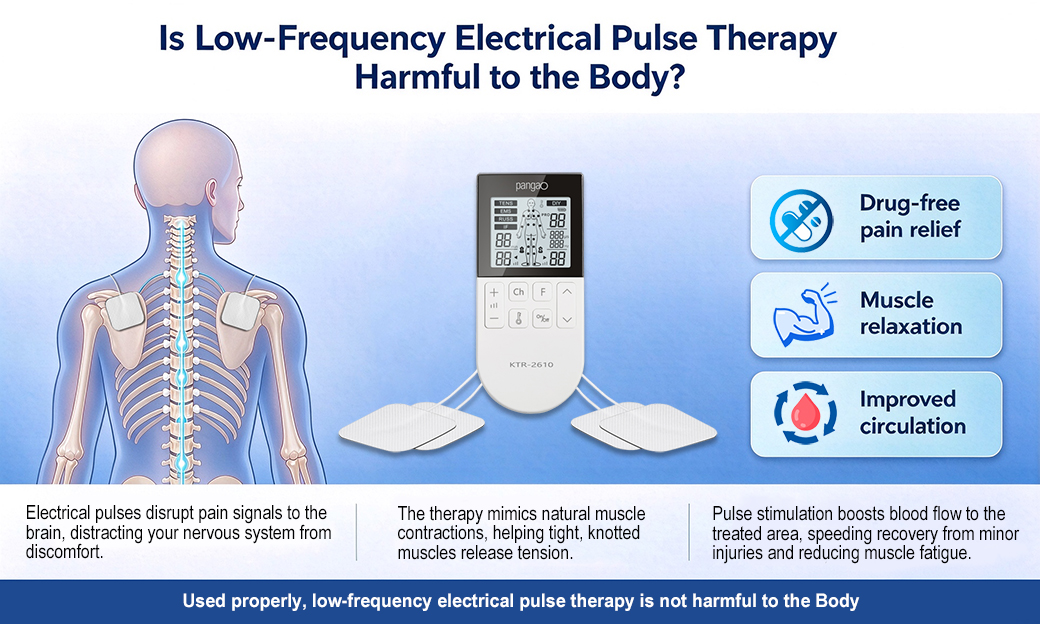
If you've ever shopped for a muscle relaxer or pain relief device, you've likely come across low-frequency electrical pulse therapy. The promise is appealing—drug-free pain relief, muscle relaxation, and improved circulation—all from a device you can use at home. But a nagging question lingers: is this actually safe, or am I sending tiny electric shocks through my body at my own risk?
Here's the straightforward answer: when used correctly, low-frequency electrical pulse therapy is not harmful to the body. The problems arise when usage guidelines are ignored, equipment is faulty, or users fall into the "more is better" trap. Let's break down what you actually need to know.
What Exactly Are We Talking About?
Low-frequency electrical pulse therapy—often delivered through devices like TENS units, EMS stimulators, and various home-use massage devices—works by sending low-frequency currents (typically between 1Hz and 1000Hz) through electrode pads placed on the skin. These currents stimulate nerves and muscle tissues, which can help block pain signals, encourage muscle contraction, and promote local blood circulation.
Think of it as a gentle "wake-up call" to your muscles and nerves—not a jolt, but a controlled physiological nudge.
When Used Correctly, It's Not Harmful—It's Beneficial
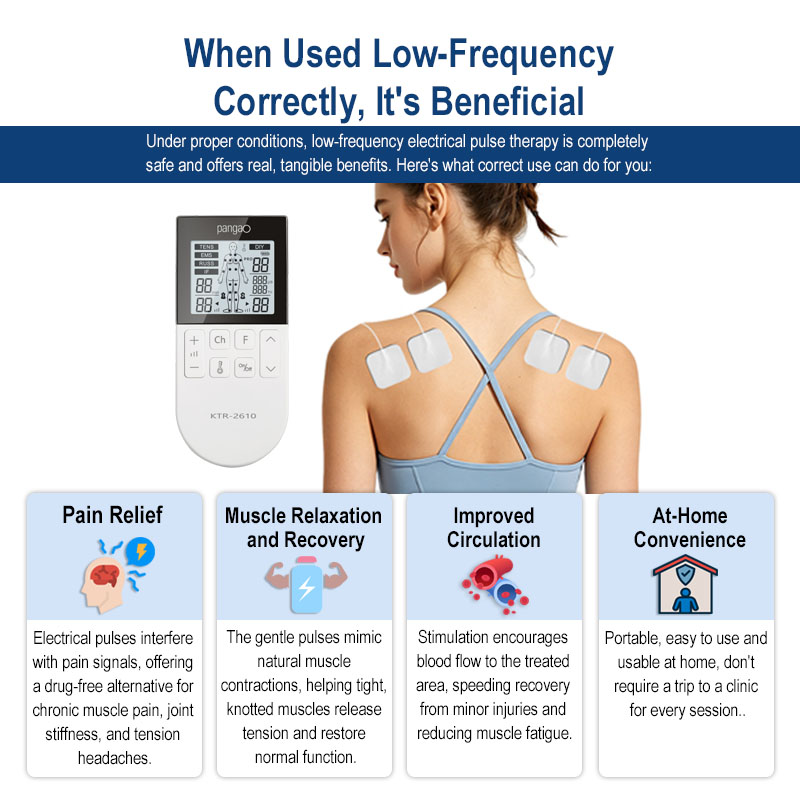
Under proper conditions, low-frequency electrical pulse therapy is completely safe and offers real, tangible benefits. Here's what correct use can do for you:
Pain Relief Without Pills. The electrical pulses interfere with pain signals traveling to your brain, effectively "distracting" your nervous system from the discomfort you're feeling. For many people dealing with chronic muscle pain, joint stiffness, or tension headaches, this offers a welcome alternative to reaching for another bottle of ibuprofen.
Muscle Relaxation and Recovery. The therapy mimics natural muscle contractions, helping tight, knotted muscles release tension. Whether you're recovering from a workout, dealing with everyday stress, or managing a stubborn knot in your shoulder, the gentle pulsing can help restore normal muscle function.
Improved Circulation. The stimulation encourages blood flow to the treated area, which can speed up recovery from minor injuries and reduce muscle fatigue. Better circulation means more oxygen and nutrients reaching your tissues—and that's never a bad thing.
Accessible, At-Home Convenience. These devices are portable, easy to use, and don't require a trip to a clinic for every session. When used as intended, they put a useful therapeutic tool right in your hands.
Where Things Go Wrong: The Risks of Improper Use
The safety data tells a clear story. Between 2010 and 2015, China's National Adverse Drug Reaction Monitoring Center received 768 reports of adverse events involving low-frequency electromagnetic therapy devices. Among these, 358 cases (46.6%) involved actual harm to users—primarily skin allergies, burns, scalds, stinging pain, and muscle numbness. The remaining 410 cases (53.4%) were equipment failures like electrical leakage, unstable output, or damaged electrodes and cables.
Here's what that means in plain language:
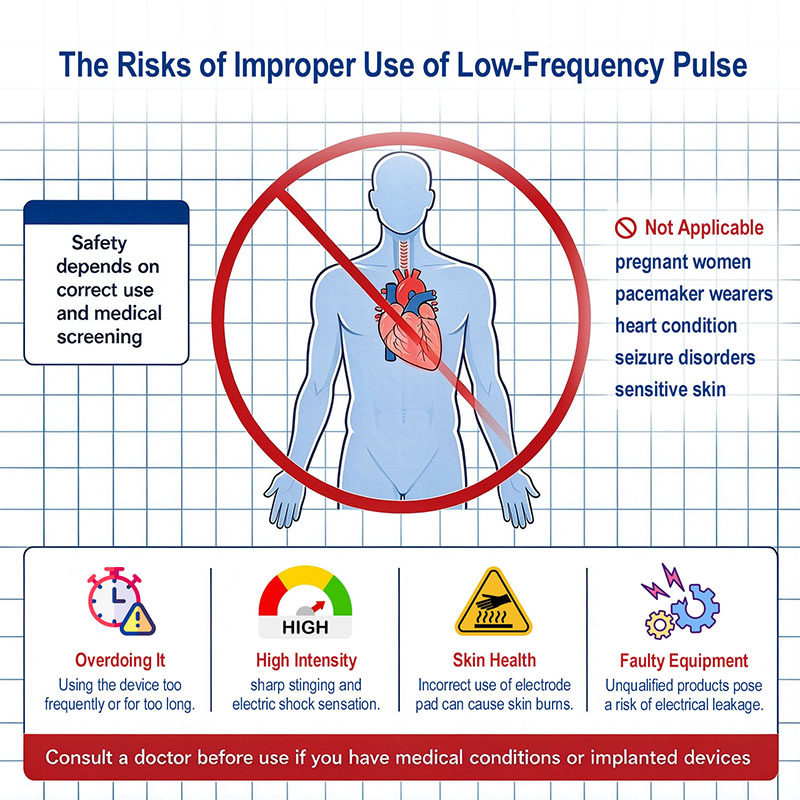
Overdoing It. Using the device too frequently or for too long can exhaust your nerves and muscles instead of helping them. One user described it as feeling like their muscles had been "overworked" rather than relaxed. The irony? The very thing meant to relieve fatigue can create more of it when you don't respect the limits.
Cranking Up the Intensity. More current doesn't mean better results—it means more risk. Cases have been reported where users suddenly experienced sharp stinging and an electric shock sensation because the pulse intensity was simply too high. One elderly patient suffered skin burns after treatment because the electrode pads had aged and were delivering excessive power without the user realizing it.
Ignoring Skin Health. Electrode pads sit directly on your skin. If your skin is broken, irritated, or sensitive to the materials in the pads, you could end up with rashes, redness, or even chemical burns. Some users have reported allergic reactions that turned a simple therapy session into an uncomfortable skin issue.
Faulty Equipment. Not all devices are created equal. Some products fail quality inspections—issues like electrical leakage, output lock-ups that suddenly spike intensity, and insufficient insulation can turn a therapeutic device into a genuine hazard. Even a small current passing through the wrong part of the body (like near the heart) can be dangerous.
Using It When You Shouldn't. Certain people should never use these devices: pregnant women, anyone with a pacemaker or serious heart condition, and people with epilepsy or seizure disorders. The electrical stimulation can interfere with pacemakers, and in susceptible individuals, it may overstimulate neural activity.
How to Use Low-Frequency Electrical Pulse Therapy Safely
If you're going to use one of these devices—and many people do so safely every day—here's how to keep it that way:
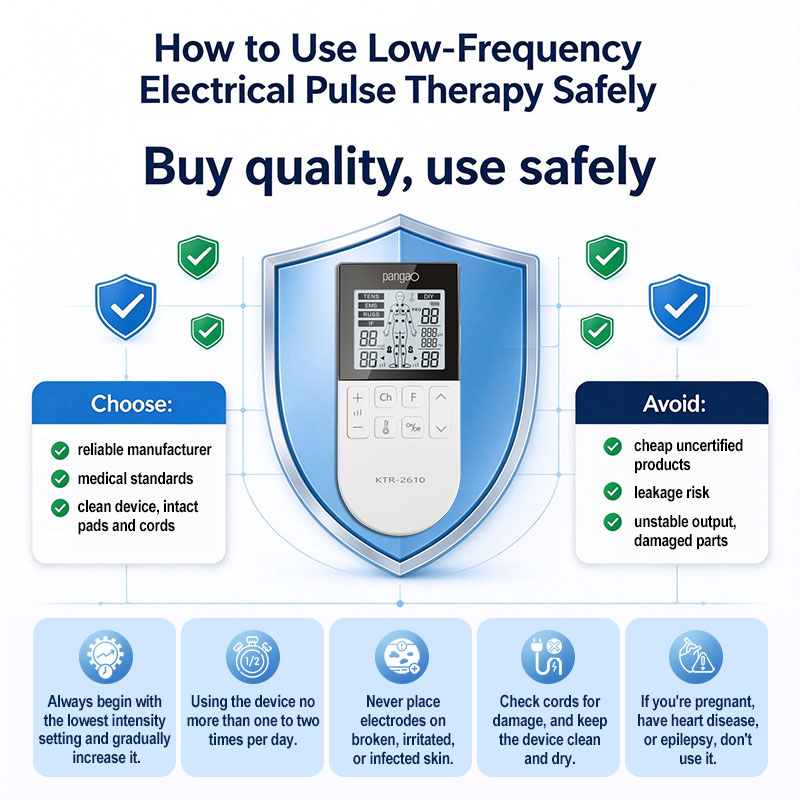
Start Low and Go Slow. Always begin with the lowest intensity setting and gradually increase it only until you feel a mild, comfortable tingling sensation. If it hurts, it's too high. Pain is not a sign that it's "working harder"—it's a sign that something is wrong.
Respect the Clock. Most guidelines recommend using the device no more than one to two times per day. More sessions don't speed up recovery; they just tire out your nerves. If you've been using it consistently for a week and your symptoms haven't improved, it's time to see a doctor—not to turn up the dial.
Check Your Skin. Never place electrodes on broken, irritated, or infected skin. If you notice redness, itching, or stinging during or after use, stop immediately and clean the area with water. Your skin is telling you something—listen to it.
Inspect Your Equipment. Old, worn-out electrode pads don't just work less effectively—they can become dangerous. Replace pads regularly (roughly every 50 uses, according to some guidelines), check cords for damage, and keep the device clean and dry.
Know Your Body's "No" Zones. Never place electrodes over your heart, on your throat, across your chest if you have heart issues, or near the head if you have a seizure disorder. And if you're pregnant, have a pacemaker, or suffer from epilepsy—just don't use these devices at all. The risks aren't worth it.
Buy Quality. Not all devices are equally safe. Choose products from reputable manufacturers that meet safety standards. Cheap, uncertified devices are more likely to have electrical leakage, unstable output, and other hidden dangers.
So, is low-frequency electrical pulse therapy harmful? Low-frequency electrical pulse therapy is not inherently harmful. When used thoughtfully—with respect for your body's limits, attention to equipment condition, and a healthy dose of common sense—it can be a safe, effective tool for managing pain and relaxing muscles.
Subscribe means that you have read and agree to the Privacy Policy.

Subscribe means that you have read and agree to the Privacy Policy.
Copyright © Shenzhen Pango Medical Electronics Co.,Ltd, Ltd. All Rights Reserved.
 FOCUS ON YOUR FAMILY HEALTH
Tel: +86-0755-33825988
Fax: +86-0755-33825989
Email: sales2@pan-go.com