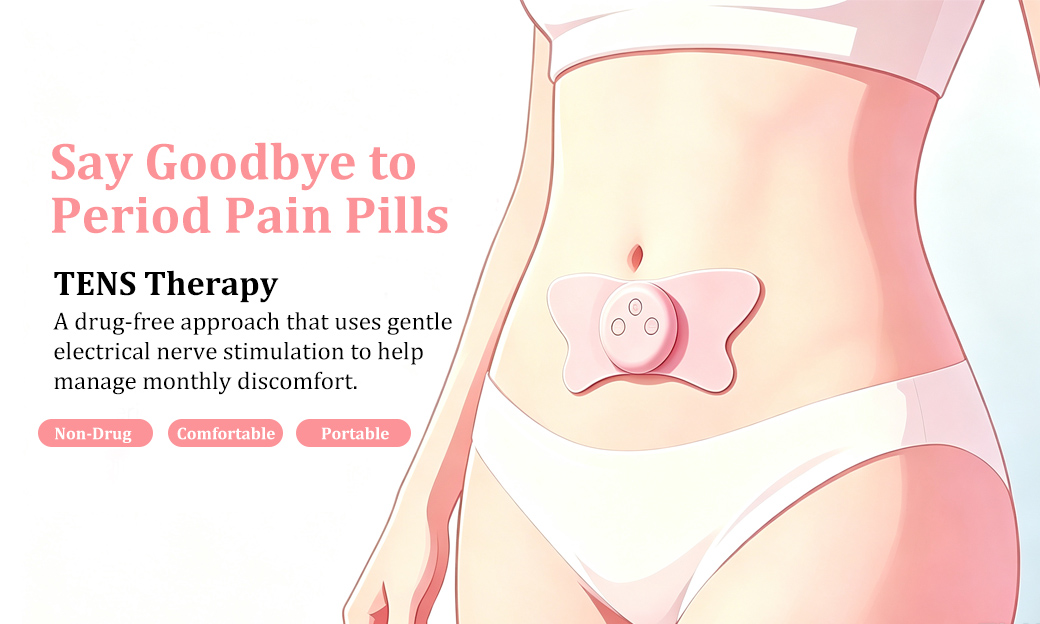
Every month, millions of women face a familiar enemy: the deep, gripping ache that starts in the lower abdomen and radiates to the lower back and thighs. For some, it is a dull nuisance; for others, it is a crippling force that sidelines them from work, social plans, and even basic daily tasks. The automatic reflex is to reach for an ibuprofen or naproxen. But what if that reflex is not the only—or even the best—option?
A growing body of clinical research points to a surprisingly simple, drug-free alternative that uses your body’s own wiring to turn down the volume on period pain. It is called transcutaneous electrical nerve stimulation, or TENS, and it has been quietly transforming how women manage their monthly cycle—without pills, without needles, and without the side effects that come with long-term medication use.
The Two Faces of Menstrual Pain
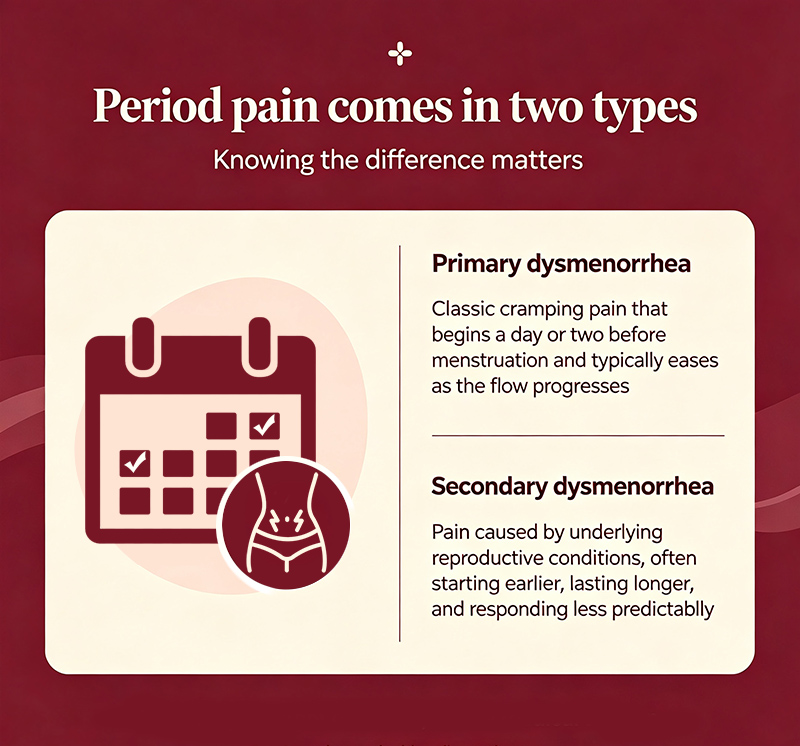
To understand why TENS works, it helps to first appreciate that period pain is not a one-size-fits-all condition. Healthcare professionals divide it into two broad categories.
The first, primary dysmenorrhea, is the classic cramping pain that starts a day or two before menstruation and usually eases as the flow progresses. It is driven by an overproduction of prostaglandins—chemical messengers that make the uterine muscle contract vigorously. When those contractions become too strong or too frequent, they squeeze off blood supply to the uterine lining, creating a state of local oxygen deprivation that the brain interprets as pain. Primary dysmenorrhea is not a sign of any underlying disease; it is simply an exaggerated physiological response.
The second type, secondary dysmenorrhea, is different. Here, the pain is a symptom of an underlying reproductive condition—endometriosis, fibroids, adenomyosis, or pelvic inflammatory disease, among others. This pain often starts earlier in the menstrual cycle, lasts longer, and may not respond as predictably to over the counter painkillers. Women with secondary dysmenorrhea need a proper medical workup, but even for them, TENS can be a valuable adjunct therapy to help manage breakthrough pain.
Where TENS truly shines is in primary dysmenorrhea—and the evidence is not just anecdotal; it is rigorously documented in peer reviewed trials.
What TENS Actually Does Inside Your Body
Many people imagine TENS as a simple “nerve blocker,” but that is only half the story. The mechanism is far more elegant and involves two distinct physiological pathways.
First, there is the gate control theory. Think of your spinal cord as a busy highway with multiple lanes. Pain signals from the uterus travel along narrow, slow moving lanes toward the brain. When you apply TENS electrodes to your lower abdomen, the electrical pulses stimulate large, fast conducting nerve fibers in the skin. These fast signals race to the spinal cord and essentially “close the gate” for the slower pain signals. The traffic jam prevents the pain message from ever reaching your conscious awareness. It is not that the pain disappears—it is that your nervous system literally cannot transmit it effectively.
But the story does not end there. TENS also triggers your brain’s internal pharmacy. The rhythmic electrical impulses prompt the release of endogenous opioids—your body’s homemade morphine, so to speak. Endorphins and enkephalins flood the synaptic spaces, binding to opioid receptors and dampening the perception of pain from the uterus. This is not a placebo effect; studies measuring opioid levels in cerebrospinal fluid have confirmed a measurable increase after TENS sessions.
Furthermore, the electrical stimulation improves local microcirculation. The gentle muscle twitching induced by TENS acts like a built in pump, encouraging blood flow through the small vessels of the uterine wall. Better blood flow means more oxygen delivery and faster clearance of inflammatory byproducts—both of which directly counteract the ischemic pain caused by prostaglandin driven spasms.
Taken together, these three actions—gate control, endogenous opioid release, and improved circulation—create a powerful, synergistic pain relief effect that is entirely drug-free and completely natural in its execution.
Why Electrical Stimulation Beats the Pill Bottle
If medication works, why bother with a device? The answer lies in the hidden costs of popping pills month after month.
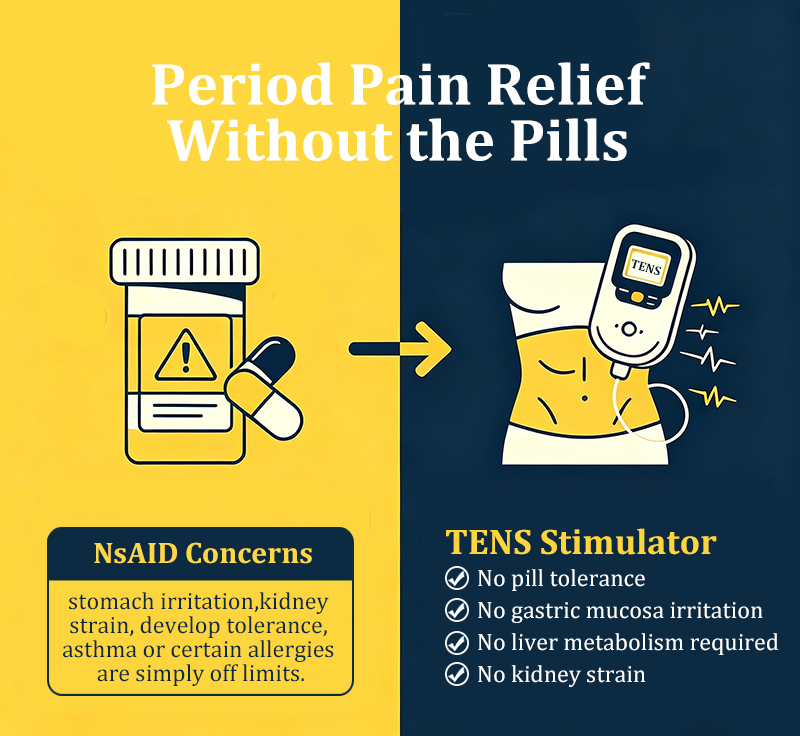
Non steroidal anti inflammatory drugs (NSAIDs) like ibuprofen are effective, but they are not harmless. Prolonged or frequent use can irritate the gastric mucosa, leading to heartburn, ulcers, or even gastrointestinal bleeding. Some women develop tolerance, requiring higher doses over time. Others experience rebound headaches or kidney strain. And for those with asthma or certain allergies, NSAIDs are simply off limits.
TENS sidesteps all of these concerns. It is non pharmacological—meaning no chemicals enter your bloodstream, no liver metabolism is required, and no stomach lining is compromised. It is also non invasive; the electrodes sit on the skin, and the current never penetrates deeper than the subcutaneous layers. With proper use, adverse effects are limited to occasional mild skin redness, which resolves quickly.
Another overlooked advantage is control. With a pill, you take a fixed dose and wait. With TENS, you are the master of your own therapy. You can adjust the intensity, switch modes, and even apply it exactly when the pain starts to escalate—not ten minutes later, not after digestion, but instantly. This immediacy is crucial because menstrual cramps often come in waves; being able to ramp up stimulation during a peak pain surge gives you an agility that oral medication simply cannot match.
Clinical data supports this: one randomized trial showed that TENS users reduced their NSAID consumption by over 90% during their menstrual periods. That is not just a statistical figure; it translates into fewer pills swallowed, fewer side effects endured, and a greater sense of self efficacy in managing one’s own health.
A Device That Puts Science in Your Hands: Pangao KTR-2402
The science is compelling, but science alone does not relieve pain—you need a reliable tool to deliver it. This is where the Pangao TENS Unit KTR-2402 enters the picture, not as a gimmick, but as a thoughtfully engineered embodiment of the very principles we have discussed.
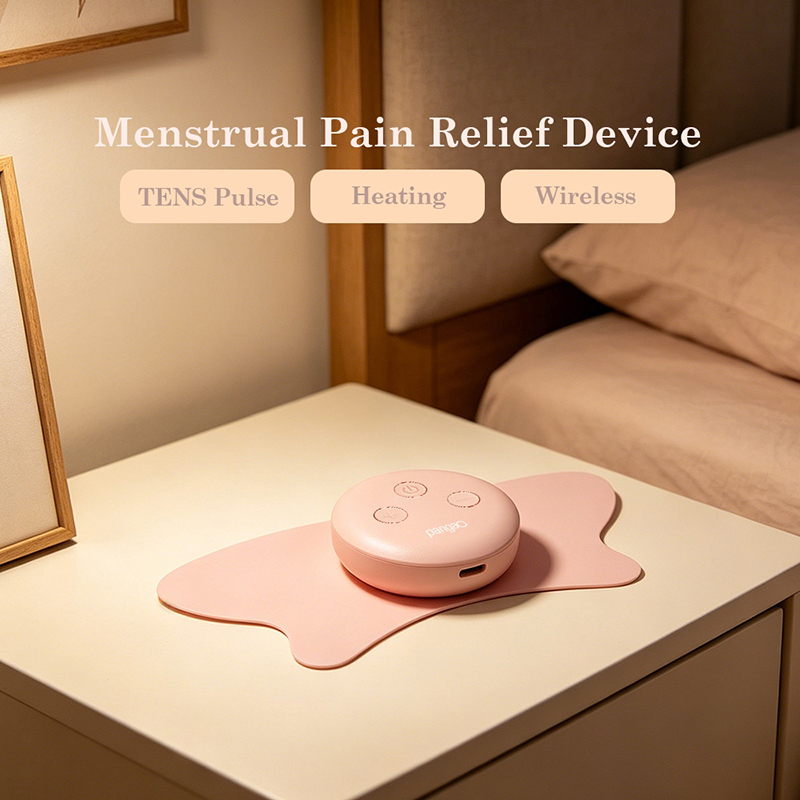
At its core, the KTR-2402 generates precise TENS pulses that can be tailored to your unique pain profile. It offers three distinct modes—each modulating the frequency and pulse width differently. One mode might mimic a gentle tapping sensation, ideal for early stage cramps; another delivers a deeper, more rhythmic contraction for severe spasms; the third offers a mixed pattern that many users find soothing for prolonged wear. On top of that, 30 adjustable intensity levels give you granular control, from barely perceptible to strong but comfortable—always under your thumb.
What sets this device apart from older, bulkier units is its integrated constant temperature heat function. The KTR-2402 maintains a steady 43°C warmth across the electrode area. Why does heat matter? Because heat relaxes tense abdominal muscles, dilates superficial blood vessels, and further enhances local circulation—working in concert with the electrical pulses. This dual action approach—electrical plus thermal—creates a relief experience that feels both immediate and deeply soothing, much like a warm compress combined with a targeted massage, but delivered with clinical precision.
Portability is another game changer. The KTR-2402 is wireless and compact, fitting easily into a handbag or a desk drawer. You are not tethered to a wall outlet or a bulky console. Whether you are at your office chair, commuting on a train, or unwinding on your sofa, you can discreetly apply therapy without interrupting your day. This freedom is liberating for women who have long accepted that period pain means staying home; now, relief can travel with you.
Importantly, this device carries FDA clearance and MDR certification—meaning it has undergone rigorous safety and efficacy evaluations. It is not a wellness trinket; it is a registered medical device that adheres to international standards. For the user, this translates into peace of mind: you are not experimenting with an unproven gadget; you are using a tool that has been vetted by regulatory authorities.
Using TENS Safely: What You Need to Know
TENS is remarkably safe for the majority of users, but it is not a free for all. Responsible use requires awareness of a few absolute rules.
Do not use TENS if you have a cardiac pacemaker, an implanted defibrillator, or any electronic implant. The electrical current can interfere with these devices, with potentially serious consequences. Similarly, if you have epilepsy or a history of seizures, avoid TENS unless your neurologist explicitly approves it.
Never place electrodes on the front of your neck, over your eyes, on the head, or directly over the spine. These areas contain sensitive nerves, blood vessels, or the carotid sinus, which could trigger adverse reactions. Also avoid broken, infected, or irritated skin—the electrodes need intact skin to function properly and to prevent burns.
Do not use TENS while driving, operating heavy machinery, bathing, or sleeping. The distraction or the inability to adjust settings could lead to injury. Always start with the lowest intensity and gradually increase until you feel a strong but pleasant tingling—never a sharp or burning sensation.
Pregnancy is a red flag. Unless specifically directed by your obstetrician, do not use TENS over the abdomen during pregnancy, as the effects on uterine activity are not fully understood.
Take breaks. Prolonged continuous use—more than 30–45 minutes without a pause—can fatigue the underlying muscles and reduce effectiveness. A common practice is 20 minute sessions with at least 10 minute rest intervals. Also, clean your skin and electrodes regularly to maintain good contact and hygiene.
If you experience persistent skin redness, itching, or discomfort, discontinue use and consult a healthcare provider. These reactions are rare, but individual sensitivities vary.
Menstrual cramps have been normalized for far too long. The prevailing attitude—that pain is just part of being a woman—has discouraged many from seeking better solutions. But better solutions exist, and they do not have to come in a pill bottle.
TENS therapy offers a scientifically grounded, patient controlled, and drug-free pathway to reclaiming your days. It works with your body’s innate pain modulating systems, not against them. So the next time that familiar ache begins to stir, consider reaching for electrodes instead of a tablet. Your stomach, your liver, and your peace of mind will thank you.
Subscribe means that you have read and agree to the Privacy Policy.

Subscribe means that you have read and agree to the Privacy Policy.
Copyright © Shenzhen Pango Medical Electronics Co.,Ltd, Ltd. All Rights Reserved.
 FOCUS ON YOUR FAMILY HEALTH
Tel: +86-0755-33825988
Fax: +86-0755-33825989
Email: sales2@pan-go.com