
The medical term for painful periods is dysmenorrhea, and while reaching for a painkiller may be the default response, there is a growing interest in drug-free alternatives that address the root causes of menstrual discomfort without the side effects of medication.
Understanding the Two Types of Dysmenorrhea
Primary Dysmenorrhea
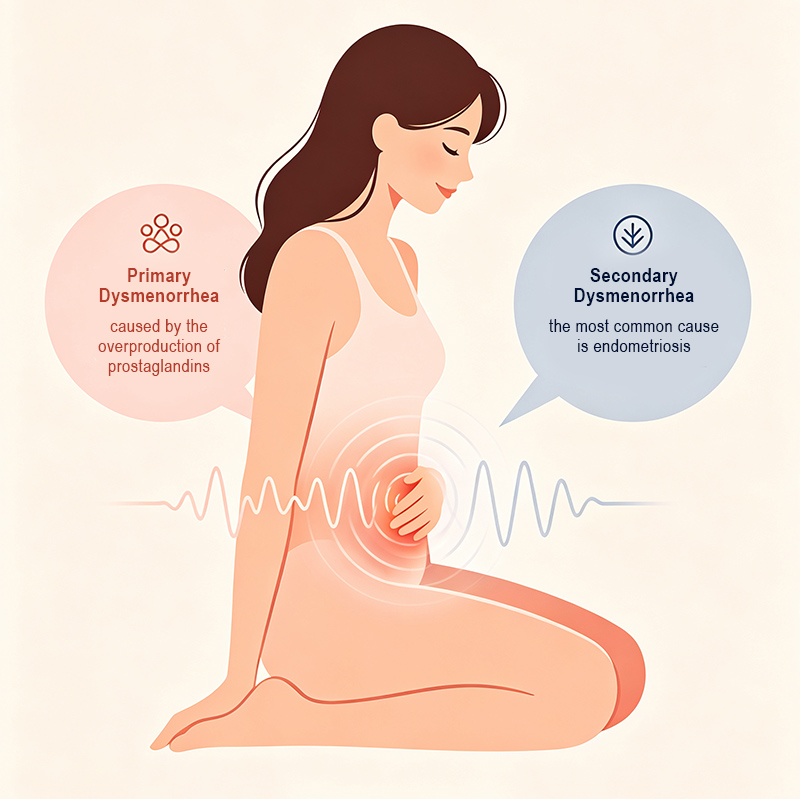
Primary dysmenorrhea refers to menstrual pain that occurs without any underlying pelvic pathology or identifiable medical cause. This is the more common type, affecting an estimated 50% to 90% of people who menstruate.
The pain typically begins one to two days before menstruation or when bleeding starts, and usually subsides within two to three days. It is caused by the overproduction of prostaglandins—hormone-like substances that trigger uterine contractions to shed the uterine lining. When prostaglandin levels are elevated, contractions become more intense and frequent, leading to cramping and pain.
Secondary Dysmenorrhea
Secondary dysmenorrhea, in contrast, results from an underlying medical condition or structural problem within the reproductive system. The most common cause is endometriosis, a condition where tissue similar to the uterine lining grows outside the uterus.
Other causes include uterine fibroids, ovarian cysts, pelvic inflammatory disease (PID), pelvic adhesions, and even copper IUDs. Pain from secondary dysmenorrhea typically begins earlier in the menstrual cycle and lasts longer than primary dysmenorrhea—you may experience cramping several days before your period, and the pain may continue until bleeding completely stops.
The distinction matters because the two types require different treatment approaches. If your period pain doesn't respond to over-the-counter painkillers, it's essential to consult a doctor to check for underlying causes.
Why Consider Alternatives to Painkillers?
Non-steroidal anti-inflammatory drugs (NSAIDs) are the first-line pharmacological treatment for dysmenorrhea. However, there are several compelling reasons to explore drug-free alternatives:
1. Side Effects of Medications
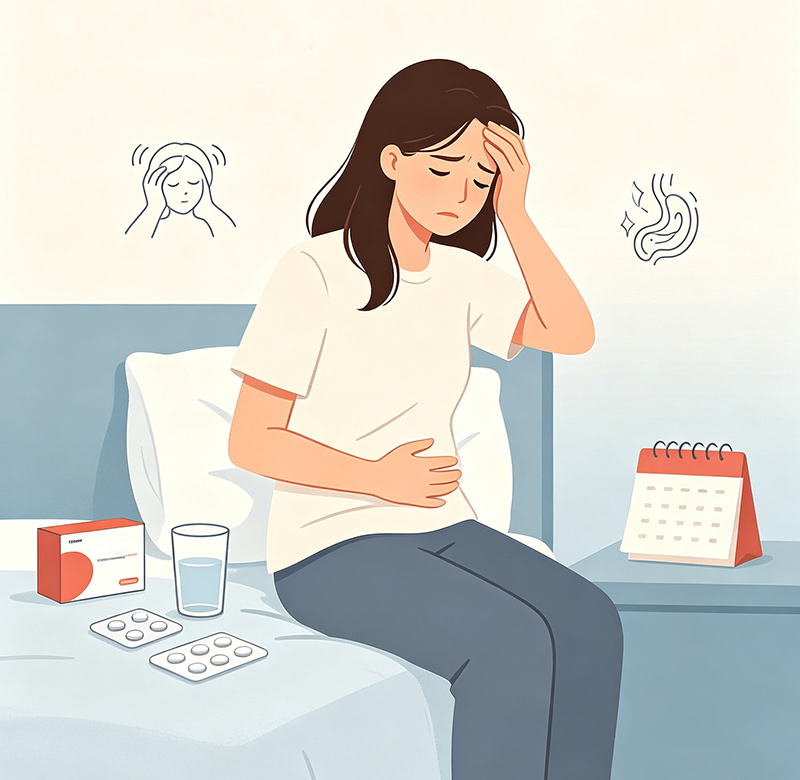
NSAIDs and oral contraceptives can increase the risk of adverse effects, including mild neurological symptoms such as headaches, drowsiness, and dizziness, as well as gastrointestinal issues like nausea and indigestion. For women who experience these side effects, the "cure" can sometimes feel worse than the condition itself.
2. Contraindications and Health Conditions
Some women cannot take NSAIDs due to contraindications, pre-existing health conditions, or interactions with other medications they are taking. For these individuals, drug-free options aren't just a preference—they're a necessity.
3. Insufficient Relief
Some women experience inadequate pain relief from pharmacological treatments. When painkillers don't provide sufficient relief, exploring alternative approaches becomes essential.
4. Preference for Natural, Non-Invasive Approaches
Many women simply prefer non-pharmacological, natural approaches to managing their health. Complementary and alternative therapies have been used to treat primary dysmenorrhea for centuries and lack the drawbacks associated with traditional symptomatic medications.
5. Long-Term Sustainability
Drug-free approaches often address not just the symptom but the underlying factors contributing to pain—whether through improving circulation, reducing inflammation, or relaxing tense muscles. This makes them more sustainable for long-term management.
Drug-Free Relief Methods for Period Pain
1. TENS + Heat
Transcutaneous Electrical Nerve Stimulation (TENS) isn’t new, but its application for period pain has been refined dramatically. The science: low-frequency pulses activate large-diameter nerve fibres that “close the gate” on pain signals travelling to the spinal cord. Meanwhile, high-frequency pulses stimulate endorphin release—your body’s own morphine.
But here’s the kicker: TENS works best when combined with warmth. Heat alone relaxes uterine muscles and dilates blood vessels; TENS alone interrupts nerve signals. Together, they tackle both the muscular and neurological sides of cramping.
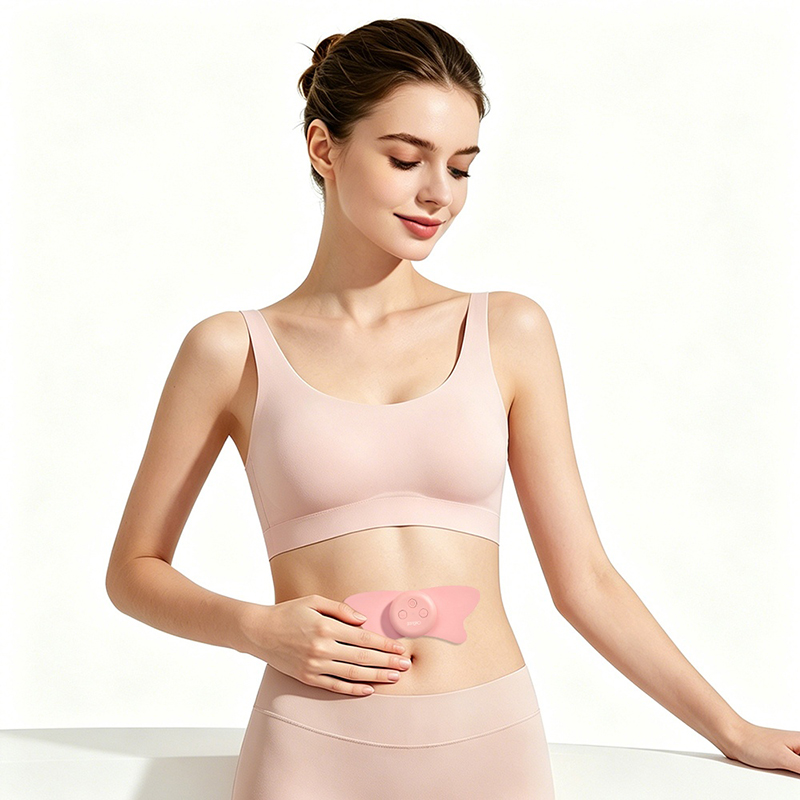
This is exactly why the Pangao Period Pain TENS Unit KTR-2402 stands out. It doesn’t just offer TENS—it pairs it with a steady 43°C constant heating pad that wraps comfortably around your lower abdomen. What makes it truly personal is the 3 distinct modes (pulse, massage, and mixed) and 30 intensity levels. In my experience, that range isn’t a gimmick—it lets you adjust the stimulation from a gentle tingle on a mild day to a robust counter-irritation when cramps are intense. And because it’s FDA and MDR approved, you’re not gambling with safety.
Unlike clinic-based TENS machines, the KTR-2402 is portable, rechargeable, and silent—so you can use it while working, reading, or even sleeping. For primary dysmenorrhea with strong spasms, this combination often brings relief within 10–15 minutes, without a single pill.
2. Acupoint Stimulation
Acupuncture has moved from “alternative” to “evidence-based” for period pain. A 2023 meta-analysis of over 1,900 women showed that acupoint stimulation (needles or pressure) reduces pain intensity by a moderate to large effect size, and the benefit grows with repeated sessions.
But you don’t always need needles. Acupressure—using your fingers or a small massager—on points like SP6 (Sanyinjiao) and CV4 (Guanyuan) can be done at home. The proposed mechanism: it modulates the autonomic nervous system, reduces sympathetic tone, and increases local microcirculation.
If you combine acupressure with the heat function of a device like the KTR-2402 (placing the pad over those acupoints), you get a synergistic effect—heat enhances the tissue permeability and nerve response to pressure. Many users report that alternating TENS sessions with acupressure gives them a “full-spectrum” relief that neither provides alone.
3. Myofascial Release
Here’s something most period-pain articles miss: the fascia. The uterine ligaments connect to the pelvic floor and lower back fascia. When these connective tissues become tight—often due to poor posture, stress, or previous inflammation—they can pull on the uterus and exacerbate cramps.
Myofascial release (MFR) uses gentle, sustained pressure to unwind these restrictions. A controlled trial published in 2022 found that women who received MFR had a 30% greater reduction in pain compared to those using TENS alone, and the effect lasted for four weeks post-treatment.
While professional MFR is ideal, you can perform self-release with a soft ball or foam roller on your glutes and lower back. And here’s where the KTR-2402 can indirectly help: after self-massage, applying its heat pad to the lower abdomen and lower back maintains the tissue pliability, preventing the fascia from tightening up again. It’s a perfect post-therapy maintenance tool.
4. Lifestyle Tweaks That Actually Move the Needle
Lifestyle changes are often dismissed as “too slow,” but they build the foundation for all other treatments. Three that have strong evidence:
Magnesium + vitamin B6 – They reduce prostaglandin synthesis and muscle excitability. Food sources: pumpkin seeds, dark chocolate, spinach.
Ginger supplement – 250 mg four times a day during the first 3 days of menstruation has been shown to be as effective as mefenamic acid in some trials.
Low-intensity cardio – Just 30 minutes of walking or cycling on day 1 increases pelvic blood flow and clears inflammatory metabolites.
Putting It All Together: Your Monthly Action Plan
Instead of waiting for pain to peak, try this timeline:
2–3 days before expected period – Start magnesium supplementation and gentle stretching. If you have secondary dysmenorrhea, consider a self-myofascial release session.
Day 1 (onset of bleeding) – At the first twinge, place the Pangao KTR-2402 on your lower abdomen. Start with Mode 1 (pulse) at intensity 10–15, with heat on. Increase intensity gradually as needed. Most women find that a 20-minute session halts the escalation of cramps.
Between cycles – Use the acupressure points once daily to improve pelvic circulation and reduce nervous system sensitivity.
This proactive, layered strategy is far more effective than reactive popping of pills. And because the KTR-2402 is reusable for years, the cost per use drops to pennies—while your reliance on medication drops to zero.
A Final Word on Safety and Realistic Expectations
Drug-free doesn’t mean “instant” or “miracle.” TENS may take 2–3 cycles to reach full efficacy as your nervous system adapts. Acupuncture often needs 4–6 sessions. And lifestyle changes take time. But the trend is clear: women who combine these methods report not only less pain but also better mood, less fatigue, and a greater sense of control over their bodies.
If your pain is severe, unrelenting, or accompanied by fever or heavy bleeding, please see a gynaecologist—secondary causes need medical treatment, and these drug-free tools should complement, not replace, professional care.
Subscribe means that you have read and agree to the Privacy Policy.

Subscribe means that you have read and agree to the Privacy Policy.
Copyright © Shenzhen Pango Medical Electronics Co.,Ltd, Ltd. All Rights Reserved.
 FOCUS ON YOUR FAMILY HEALTH
Tel: +86-0755-33825988
Fax: +86-0755-33825989
Email: sales2@pan-go.com