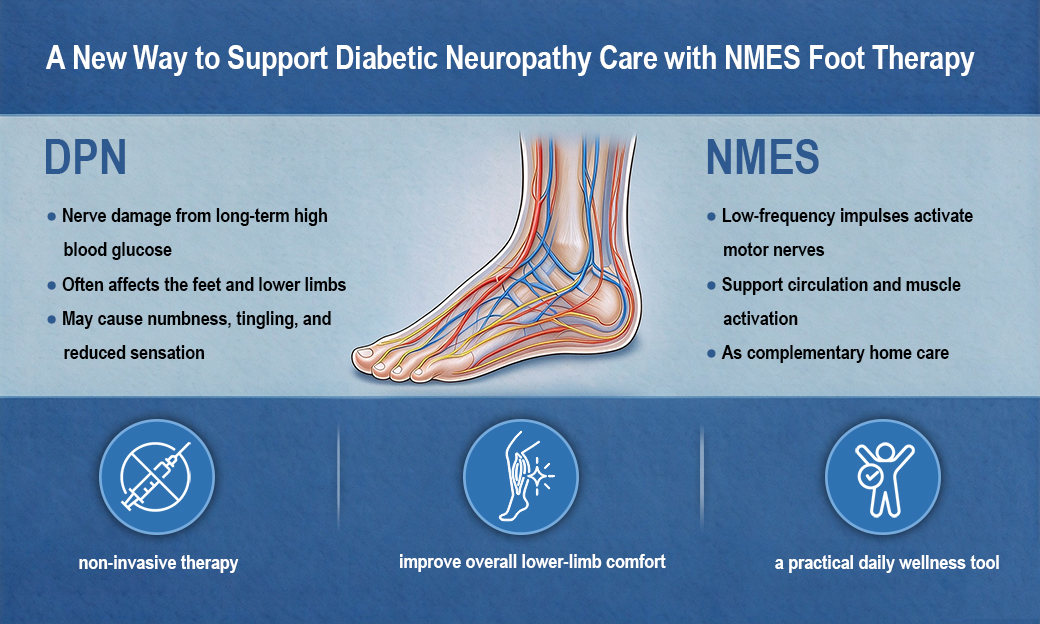
Diabetic Peripheral Neuropathy (DPN) is a common complication of diabetes that affects the peripheral nerves, especially in the feet and lower limbs. Over time, high blood glucose levels can damage nerve fibers, leading to symptoms such as numbness, tingling, burning pain, and reduced sensitivity to temperature or touch.
As the condition progresses, patients may also experience poor balance, muscle weakness, and an increased risk of foot injuries or ulcers. Because nerve damage is often irreversible, modern management strategies focus on symptom relief, circulation support, and daily foot care to maintain quality of life.
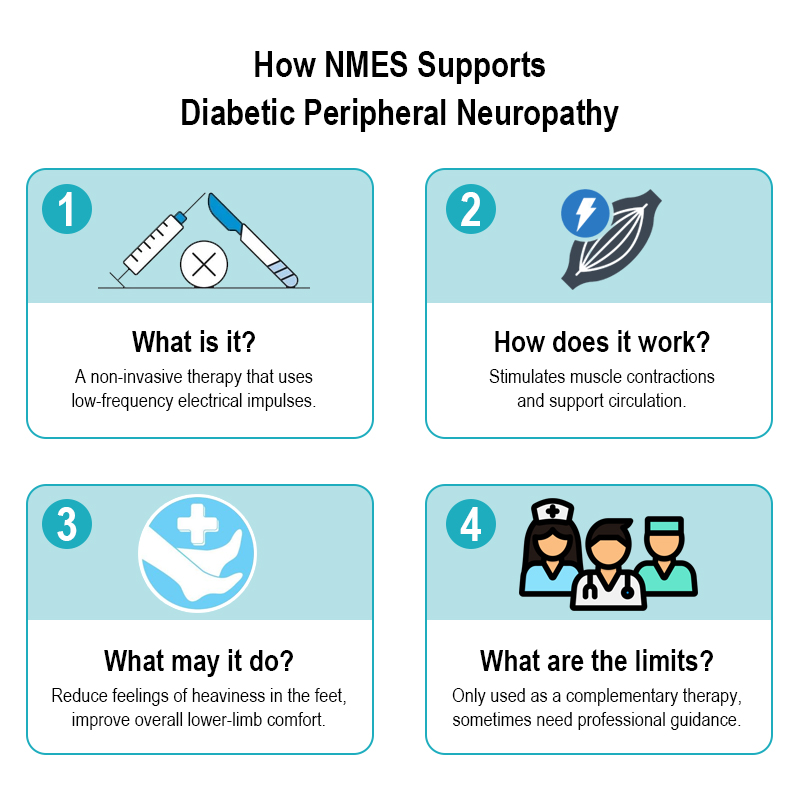
Neuromuscular Electrical Stimulation (NMES) is a non-invasive therapy that uses low-frequency electrical impulses to activate motor nerves and stimulate muscle contractions. This controlled stimulation may help improve local blood circulation, enhance muscle activation, and support neuromuscular function in the lower limbs.
For individuals with diabetic peripheral neuropathy, NMES is increasingly used as a complementary therapy to support daily foot care routines. While it does not cure nerve damage, it may help reduce feelings of heaviness in the feet, support mobility, and improve overall lower-limb comfort when used consistently.
Unlike drug-based interventions, NMES therapy is typically used at home as part of a long-term wellness strategy, making it especially suitable for elderly users or individuals seeking non-invasive support options.
Although NMES is widely used for diabetic foot care, its benefits are not limited to neuropathy management. Many elderly users also use NMES foot therapy devices to support general lower-limb wellness, especially when dealing with reduced mobility, stiffness, or knee-related discomfort.
By stimulating the muscles in the feet and lower legs, NMES may help improve circulation and reduce feelings of fatigue after prolonged sitting or standing. This makes it a practical daily wellness tool for aging populations who want to maintain mobility and independence.
Foot care is one of the most critical aspects of diabetes management, as reduced sensation in the feet can make injuries difficult to detect early. NMES-based foot therapy devices are designed to address this by stimulating the muscles and improving local circulation in a controlled and comfortable way.
One example is the Pangao NMES Foot Therapy Device KTR-4029, which is specifically developed for home-based lower-limb care. It delivers NMES pulse stimulation directly to the feet, helping users incorporate electrical stimulation therapy into their daily routine without clinical supervision.
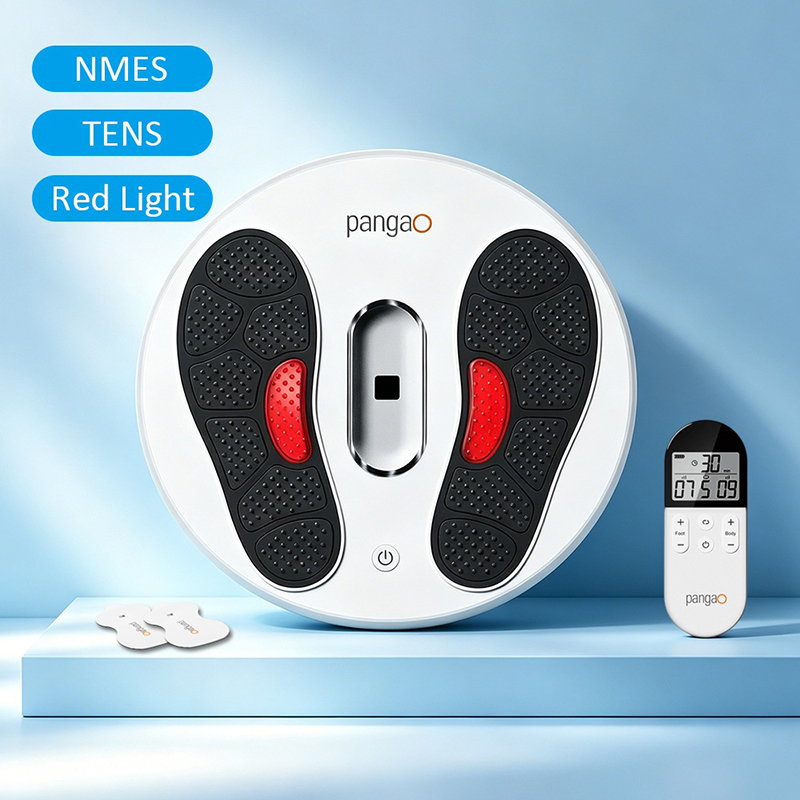
The Pangao KTR-4029 NMES Foot Therapy Device is designed with multiple therapy configurations to meet different user needs. It features nine preset massage modes and twenty levels of adjustable intensity, allowing users to customize the stimulation based on sensitivity and comfort level. This makes it suitable for both beginners and long-term users who require different levels of therapeutic intensity over time.
In addition to NMES technology, the device also integrates red light therapy, which is commonly used in wellness applications to support local tissue relaxation and comfort. The combination of electrical stimulation and phototherapy provides a more comprehensive foot care experience for users with diabetic peripheral neuropathy or circulation-related discomfort.
NMES vs TENS: Understanding Dual-Function Pain Relief Technology
While NMES focuses on muscle activation and circulation improvement, Transcutaneous Electrical Nerve Stimulation (TENS) works differently by targeting sensory nerves to help reduce the perception of pain.
A good example of a dual-technology device is the Pangao KTR-4029 NMES & TENS Therapy Device, which combines both approaches in one system. It provides NMES-based foot stimulation for lower-limb care while also offering TENS electrode pads for broader pain relief applications across the body.
With the included TENS pads, the device can be applied to areas such as the back, shoulders, neck, and joints, making it suitable not only for diabetic foot care but also for general musculoskeletal discomfort. This dual-function design significantly expands its usability for home-based pain management.
Why NMES Therapy Is Becoming Popular in Home Healthcare
The growing interest in NMES therapy is closely linked to the increasing demand for non-invasive, drug-free wellness solutions. For individuals with diabetic peripheral neuropathy, circulation problems, or age-related mobility decline, NMES offers a practical way to support daily foot health without requiring clinical visits.
Devices like the Pangao KTR-4029 reflect this trend by combining multiple therapeutic technologies into compact home-use systems. With adjustable intensity levels, multiple modes, and additional features such as red light therapy or TENS functionality, they provide flexible solutions for different user needs.
NMES therapy is becoming an important supportive tool in the management of diabetic peripheral neuropathy, particularly for improving circulation, supporting muscle activity, and enhancing daily foot comfort. While it is not a replacement for medical treatment, it can play a valuable role in long-term foot care strategies. Products such as the Pangao KTR-4029 NMES Foot Therapy Device and the KTR-4015 NMES & TENS Therapy Device make these technologies more accessible for home users, offering a combination of NMES stimulation, adjustable therapy modes, and multi-functional pain relief options.
Subscribe means that you have read and agree to the Privacy Policy.

Subscribe means that you have read and agree to the Privacy Policy.
Copyright © Shenzhen Pango Medical Electronics Co.,Ltd, Ltd. All Rights Reserved.
 FOCUS ON YOUR FAMILY HEALTH
Tel: +86-0755-33825988
Fax: +86-0755-33825989
Email: sales2@pan-go.com