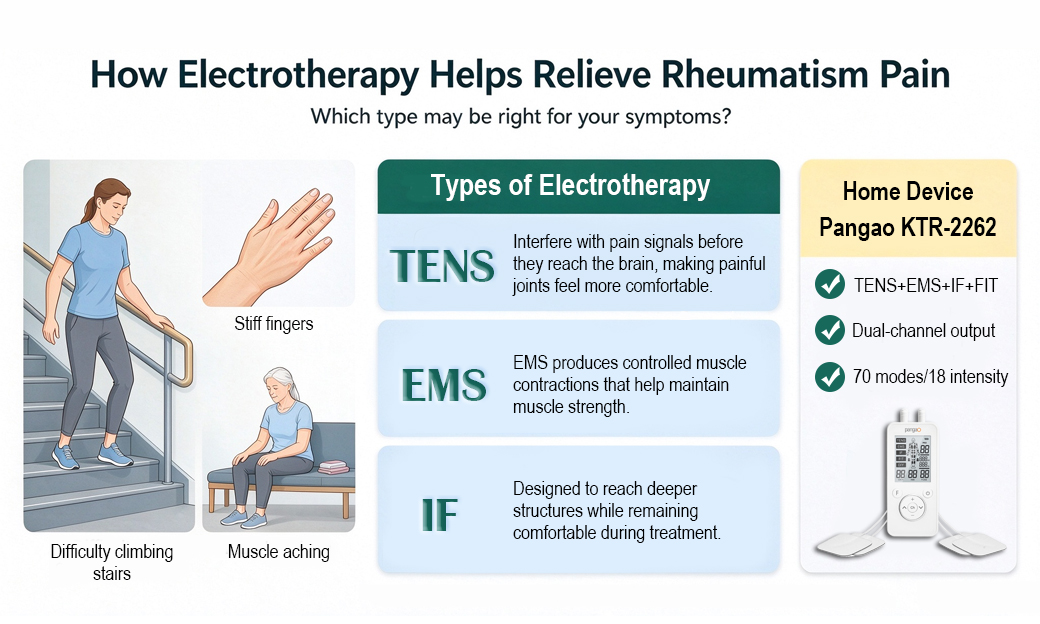
Joint pain that makes climbing stairs difficult. Stiff fingers every morning. Aching muscles after even light activity. These are everyday challenges for millions of people living with rheumatic diseases.
Although medications are essential for controlling inflammation in many forms of rheumatism, they are not the only way to manage symptoms. Increasingly, rehabilitation specialists recommend electrical stimulation therapy as part of a broader treatment plan to reduce pain, improve muscle function, and support mobility.
So, how effective is electrical therapy for rheumatism? Which type should you choose? And can a home therapy device provide meaningful relief? This guide explains what you need to know.
Pain caused by rheumatic diseases doesn't come from just one source.
Inflamed joints may trigger pain signals, while limited movement can weaken surrounding muscles. Poor circulation and prolonged stiffness often make symptoms even worse. Electrical stimulation addresses several of these problems simultaneously rather than focusing on only one.
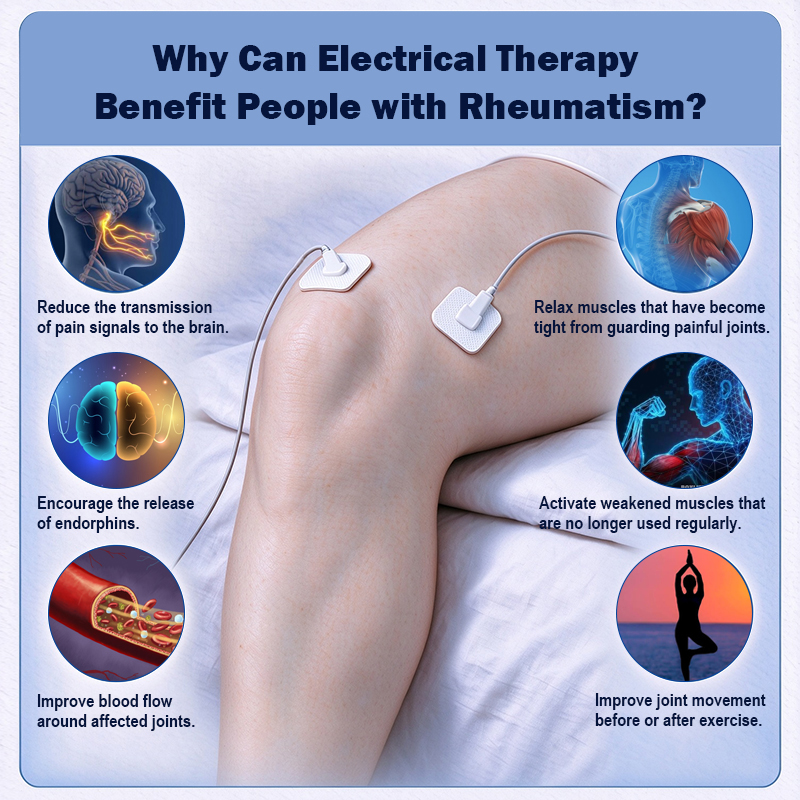
Depending on the treatment mode, electrical stimulation can:
· Reduce the transmission of pain signals to the brain
· Encourage the release of endorphins that naturally relieve pain
· Improve blood flow around affected joints
· Relax muscles that have become tight from guarding painful joints
· Activate weakened muscles that are no longer used regularly
· Improve joint movement before or after exercise
This combination of effects explains why electrotherapy is commonly included in rehabilitation programs for people with chronic musculoskeletal conditions.
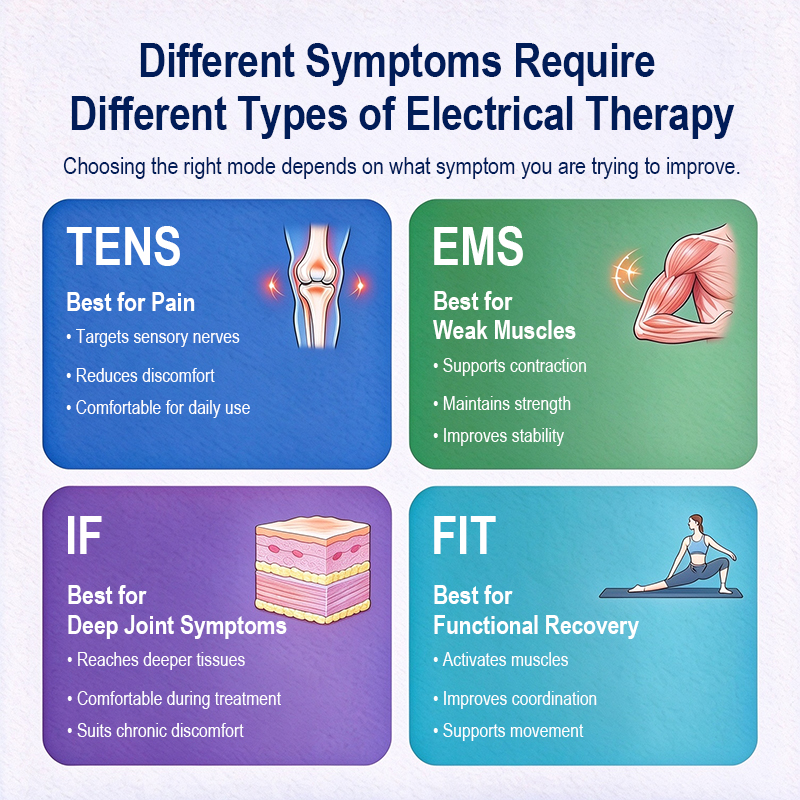
One common misconception is that all electrical stimulation works the same way. In reality, each therapy mode has a different purpose. Choosing the right mode depends on what symptom you are trying to improve.
Transcutaneous Electrical Nerve Stimulation (TENS) focuses primarily on sensory nerves. Its gentle electrical pulses interfere with pain signals before they reach the brain, making painful joints feel more comfortable without causing muscles to contract.
People with rheumatism often use TENS when they experience:
· Knee pain
· Shoulder discomfort
· Hand and finger pain
· Neck stiffness
· Lower back pain
Because it is comfortable and easy to tolerate, TENS is frequently used for daily pain management.
Pain often causes people to avoid movement. Over time, this lack of activity weakens the muscles that support affected joints.
Electrical Muscle Stimulation (EMS) solves a different problem than TENS. Instead of targeting sensory nerves, EMS produces controlled muscle contractions that help maintain muscle strength.
Regular EMS sessions may help:
· Improve muscle endurance
· Prevent muscle loss
· Increase joint stability
· Support rehabilitation after long periods of inactivity
For many patients, stronger muscles also mean less stress on painful joints.
Interferential Therapy (IF) combines two medium-frequency currents to create stimulation deep inside body tissues. Unlike surface-level stimulation, IF is designed to reach deeper structures while remaining comfortable during treatment.
This makes it especially suitable for:
· Hip pain
· Knee osteoarthritis
· Shoulder stiffness
· Chronic lower back discomfort
Many rehabilitation clinics use interferential therapy because patients often find it more comfortable during longer treatment sessions.
Faradic Interrupted Therapy (FIT) emphasizes muscle activation and coordinated movement.
Rather than focusing only on pain reduction, FIT helps muscles contract more effectively, making it valuable during rehabilitation.
Potential benefits include:
· Restoring muscle function
· Improving coordination
· Enhancing circulation
· Supporting everyday movement
Although FIT is less familiar to home users, it remains an important rehabilitation technology.
Home electrotherapy devices are designed for convenience, but proper use is essential. To maximize both safety and effectiveness:
· Always read the instruction manual before first use.
· Position electrode pads according to the recommended placement diagrams.
· Begin with the lowest comfortable intensity.
· Avoid placing electrodes across the chest or over the front of the neck.
· Do not use the device on damaged or infected skin.
· Keep the electrode pads clean to ensure consistent stimulation.
Electrical stimulation should generally be avoided by people who have implanted cardiac devices such as pacemakers, unless approved by their physician. If symptoms become worse instead of better, treatment should be stopped and medical advice sought.
Even the most advanced electrotherapy cannot replace comprehensive medical care. Successful long-term management usually combines several approaches.
Prescription medications help control inflammation, slow disease progression, and relieve pain depending on the specific diagnosis.
Regular movement prevents joints from becoming increasingly stiff while strengthening surrounding muscles. Low-impact activities—including walking, swimming, cycling, stretching, yoga, and tai chi—are generally recommended.
Professional rehabilitation programs improve balance, flexibility, muscle strength, and joint function.
Maintaining a healthy weight, eating a balanced diet, sleeping well, and managing stress all contribute to better symptom control.
Electrical stimulation works best when it supports these treatments rather than replacing them.
Instead of buying separate devices for different treatment goals, many people prefer multifunction electrotherapy units that combine several stimulation modes.
A versatile home device allows users to adjust treatment as their symptoms change.
For example:
· Joint pain after a busy day may respond well to TENS.
· Muscle weakness during rehabilitation may benefit from EMS.
· Persistent deep discomfort around larger joints may improve with IF.
· Muscle recovery exercises can incorporate FIT or similar stimulation programs.
Having multiple treatment options provides greater flexibility throughout the rehabilitation process.
If you're looking for an all-in-one home electrotherapy solution, the Pangao KTR-2262 TENS Pulse Therapy Device is designed to provide multiple rehabilitation options in a single portable unit.
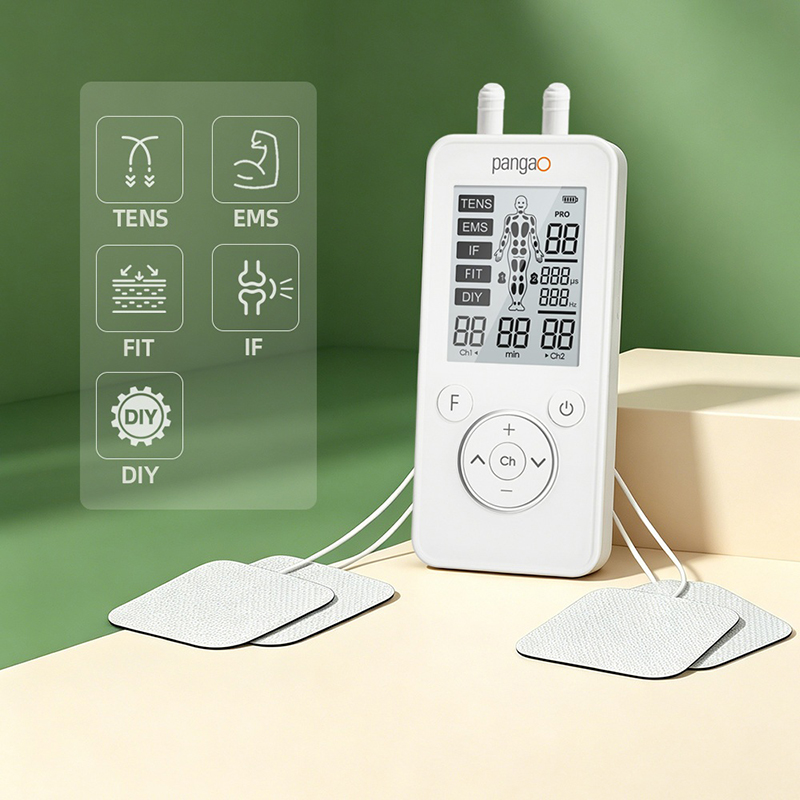
Instead of offering only conventional TENS therapy, the KTR-2262 integrates five different stimulation technologies:
· TENS for daily pain relief
· EMS for muscle strengthening
· FIT for functional recovery
· IF for deeper tissue stimulation
· DIY Mode for personalized treatment settings
Additional highlights include:
· Compact handheld design for home or travel
· Dual-channel output for treating two areas at once
· 70 preset treatment programs
· 18 adjustable intensity levels
· Simple controls suitable for everyday use
Because symptoms can vary from day to day, having multiple therapy modes in one device allows users to tailor treatment to their individual rehabilitation needs.
Electrical therapy is not a cure for rheumatism, but it can play a valuable role in symptom management. By relieving pain, activating muscles, improving circulation, and supporting rehabilitation, electrotherapy helps many people stay more active and comfortable in their daily lives. The key is choosing the right stimulation mode for your symptoms and combining electrical therapy with medication, exercise, physical therapy, and healthy lifestyle habits. For home users who want greater flexibility, a multifunction device like the Pangao KTR-2262 offers several treatment options in one compact system, making long-term rehabilitation more convenient and accessible.
Subscribe means that you have read and agree to the Privacy Policy.

Subscribe means that you have read and agree to the Privacy Policy.
Copyright © Shenzhen Pango Medical Electronics Co.,Ltd, Ltd. All Rights Reserved.
 FOCUS ON YOUR FAMILY HEALTH
Tel: +86-0755-33825988
Fax: +86-0755-33825989
Email: sales2@pan-go.com