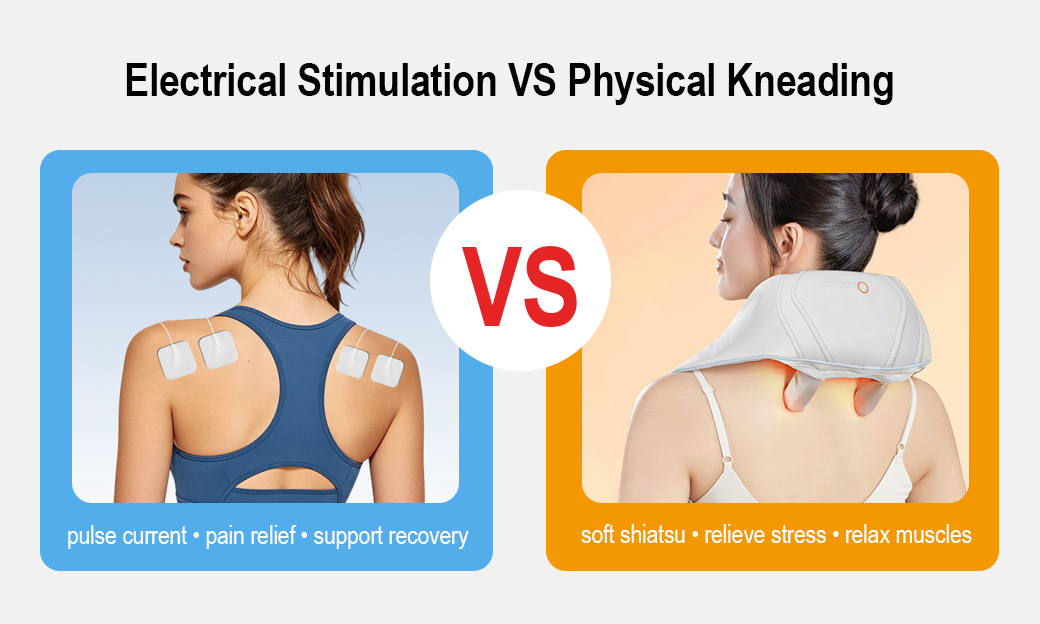
Massage therapy has evolved far beyond the traditional image of a therapist's hands working out muscle knots. Today, the field encompasses a wide spectrum of techniques—from time-honored manual manipulation to cutting-edge electrical stimulation. Among the most popular and widely available options are pulse current (electrical) massage and kneading (mechanical) massage. While both aim to relieve pain, reduce tension, and promote recovery, they operate on fundamentally different principles and serve distinctly different purposes.
What Is Pulse Current Massage?
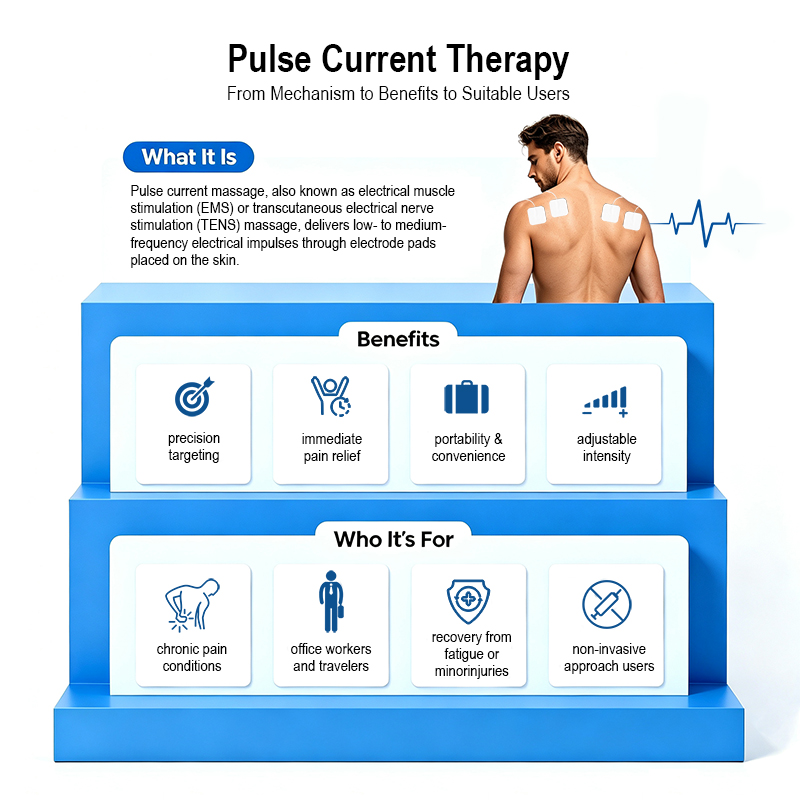
Pulse current massage, also known as electrical muscle stimulation (EMS) or transcutaneous electrical nerve stimulation (TENS) massage, delivers low- to medium-frequency electrical impulses through electrode pads placed on the skin. These impulses serve two primary functions: TENS works by interrupting pain signals traveling to the brain, providing rapid pain relief, while EMS mimics the body's natural nerve impulses to induce passive muscle contractions and relaxations.
The technology has roots in rehabilitation medicine and has been widely adopted in clinical and home-use settings. Modern pulse massage devices are typically lightweight, quiet, and highly portable—many weigh under 200 grams and produce noise levels below 35 decibels, making them suitable for office or travel use.
Who Benefits Most from Pulse Current Massage?
Pulse current massage is particularly well-suited for:
·Individuals with chronic pain conditions, such as cervical spondylosis or persistent back pain, who require deep, targeted pain relief.
·Office workers and frequent travelers who need a discreet, portable solution for on-the-go relief.
·People recovering from muscle fatigue or minor injuries, as electrical stimulation can help maintain muscle tone and prevent atrophy.
·Those who prefer a non-invasive, medication-free approach to pain management.
Advantages of Pulse Current Massage
·Precision targeting: Electrical impulses can be directed to specific muscle groups with consistent intensity.
·Immediate pain relief: TENS essentially "turns off" pain signals at the nerve level.
·Portability and convenience: Devices are small, quiet, and can be used during daily activities.
·Adjustable intensity: Users can control the strength of stimulation to match their comfort level.
Limitations and Considerations
Pulse massage requires direct skin contact with electrode pads, which can cause a mild tingling or prickling sensation that some users find uncomfortable. Individuals with sensitive skin may experience irritation or itching. Additionally, elderly individuals, young children, and those with heightened sensitivity to electrical currents are generally advised to avoid pulse massage devices. Users with pacemakers or other implanted electronic devices should also exercise caution.
What Is Kneading Massage?
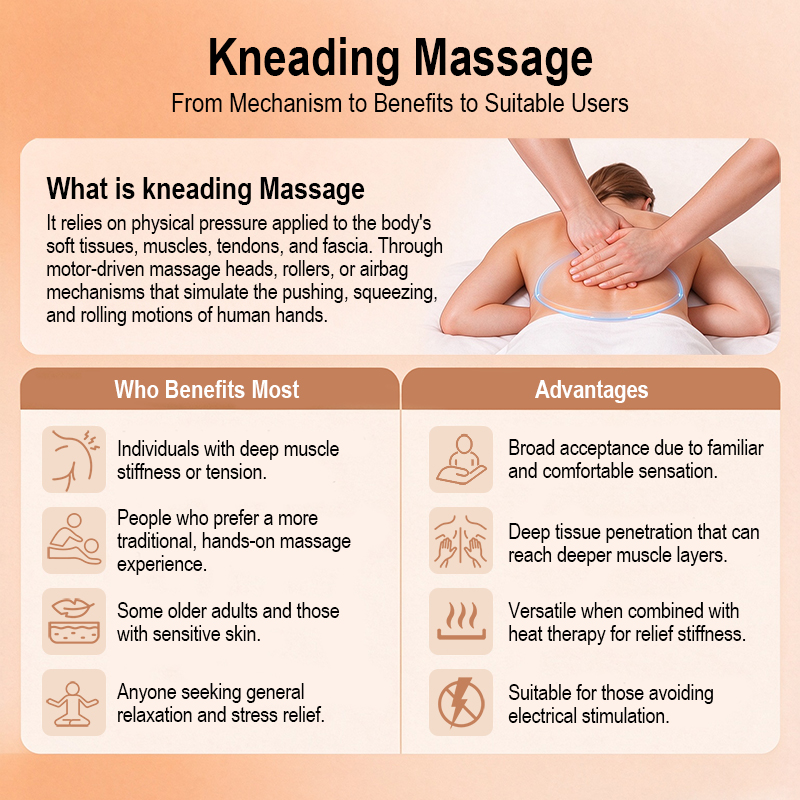
Kneading massage is the mechanical counterpart to pulse massage. It relies on physical pressure applied to the body's soft tissues—muscles, tendons, and fascia—through motor-driven massage heads, rollers, or airbag mechanisms that simulate the pushing, squeezing, and rolling motions of human hands.
This approach is rooted in traditional massage practices such as Swedish massage, where kneading (known as petrissage) is a foundational technique. Mechanical kneading devices replicate these movements with consistent force and rhythm, offering a deeply tactile experience that many users find more "natural" and immediately satisfying.
Who Benefits Most from Kneading Massage?
Kneading massage is broadly applicable and tends to appeal to:
·Individuals with deep muscle stiffness or tension, particularly in the neck, shoulders, and lower back.
·People who prefer a more traditional, hands-on massage experience and may find electrical stimulation uncomfortable.
·Some older adults and those with sensitive skin, as kneading does not involve electrical currents or direct skin contact in the same way.
·Anyone seeking general relaxation and stress relief, as the physical manipulation of muscles promotes both physiological and psychological relaxation.
Advantages of Kneading Massage
·Broad acceptance: The sensation is familiar and comfortable for most users.
·Deep tissue penetration: Mechanical pressure can reach deeper muscle layers, particularly with well-designed devices.
·Versatility: Kneading can be combined with heat therapy for enhanced relief of cold-related stiffness.
·No electrical sensitivity concerns: Suitable for individuals who cannot tolerate or are advised against electrical stimulation.
Limitations and Considerations
Kneading massage devices tend to be larger, heavier, and noisier than their pulse counterparts—many weigh over 500 grams and produce sound levels above 40 decibels. They are less portable and typically require a stable power source or frequent charging. The physical pressure may also feel too intense for some users, particularly those with acute injuries or inflammation.
Dimension | Pulse Current Massage | Kneading Massage |
Mechanism | Electrical impulses stimulate nerves and muscles | Mechanical pressure manipulates soft tissues |
Primary effect | Pain signal interruption + passive muscle contraction | Muscle relaxation + improved circulation |
Sensation | Tingling, buzzing, or mild prickling | Pressure, squeezing, rolling |
Portability | High—devices are lightweight and compact | Low—devices are bulkier and heavier |
Noise level | Quiet (<35 dB) | Audible (>40 dB) |
Skin contact | Requires direct electrode contact | Can be used over clothing |
Best for | Chronic pain, office use, travel, muscle fatigue prevention | Deep muscle tension, general relaxation, broad user base |
Not recommended for | Elderly, children, sensitive skin, pacemaker users | Users who prefer gentle or non-contact therapy |
It is important to recognize that neither modality is inherently "better" than the other. The choice depends on individual needs, tolerance, and lifestyle. As one clinical source notes, both pulse and kneading massage are effective for relaxing muscles and alleviating fatigue—the key is selecting the approach that aligns with the user's specific circumstances.
Massage as Part of a Multimodal Approach
Perhaps the most critical insight in modern therapeutic practice is that massage therapy—whether pulse-based or kneading-based—is rarely a standalone solution. The most effective treatment outcomes emerge when massage is integrated into a broader, multimodal therapeutic strategy.
From a primary care perspective, massage can be thoughtfully incorporated alongside:
·Physiotherapy to improve functional movement and strength.
·Psychotherapy and cognitive-behavioral interventions to address the psychological dimensions of chronic pain.
·Health education and lifestyle modification to prevent recurrence and promote long-term wellness.
·Other complementary modalities such as acupuncture, chiropractic care, or aromatherapy.
The rationale for this integrated approach is compelling. Massage does not merely work on muscles—it influences the central nervous system. Neuroimaging studies have demonstrated that massage alters the functional connectivity of brain networks associated with pain, stress, and emotion. It can increase alpha wave activity (associated with relaxed alertness) and modulate activity in pain-processing brain structures. When these neurological effects are combined with other therapeutic interventions, the potential for meaningful, lasting improvement grows substantially.
Subscribe means that you have read and agree to the Privacy Policy.

Subscribe means that you have read and agree to the Privacy Policy.
Copyright © Shenzhen Pango Medical Electronics Co.,Ltd, Ltd. All Rights Reserved.
 FOCUS ON YOUR FAMILY HEALTH
Tel: +86-0755-33825988
Fax: +86-0755-33825989
Email: sales2@pan-go.com