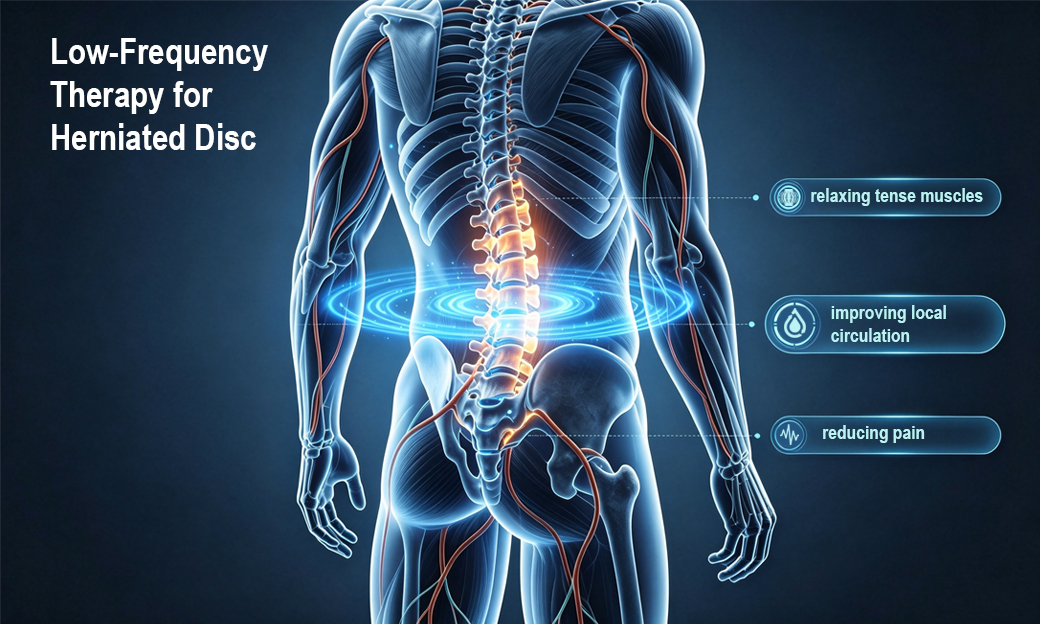
Lumbar disc herniation (LDH) is one of the most common causes of back and leg pain, affecting millions of people worldwide and significantly impacting quality of life. Among the various conservative treatment options available, low-frequency pulse therapy devices have gained considerable attention in recent years. But the question remains: are these devices genuinely helpful for lumbar disc herniation, or are they just another wellness fad?
What Is Low-Frequency Pulse Therapy?
Low-frequency pulse therapy, also known as low-frequency electrotherapy, delivers low-frequency electrical currents (typically ranging from 0Hz to 1000Hz) through electrodes placed on the skin over the affected area. These currents penetrate deep into body tissues to stimulate nerves and muscles. Unlike high-frequency modalities that generate heat, low-frequency devices primarily work through electrical stimulation rather than thermal effects.
The Therapeutic Effect: Helpful for Mild Cases
For individuals with mild to moderate lumbar disc herniation, low-frequency pulse therapy can offer meaningful relief. However, it is important to understand that these devices do not "cure" or reverse disc herniation—they cannot repair damaged disc tissue or push herniated material back into place.
What they can do is provide symptomatic relief. The therapy works by:
·Relaxing tense muscles – The electrical stimulation helps reduce muscle spasms and tightness around the lumbar spine, which are common secondary issues in disc herniation.
·Improving local circulation – Increased blood flow to the affected area helps deliver oxygen and nutrients while clearing out inflammatory byproducts.
·Reducing pain – For many patients, the therapy offers noticeable pain reduction, particularly in the acute or subacute stages.
It is worth noting that low-frequency pulse therapy is generally considered an adjunctive treatment—something used alongside other conservative measures like rest, exercise, and postural correction—rather than a standalone solution.
How Does It Work? The Mechanisms Behind the Therapy
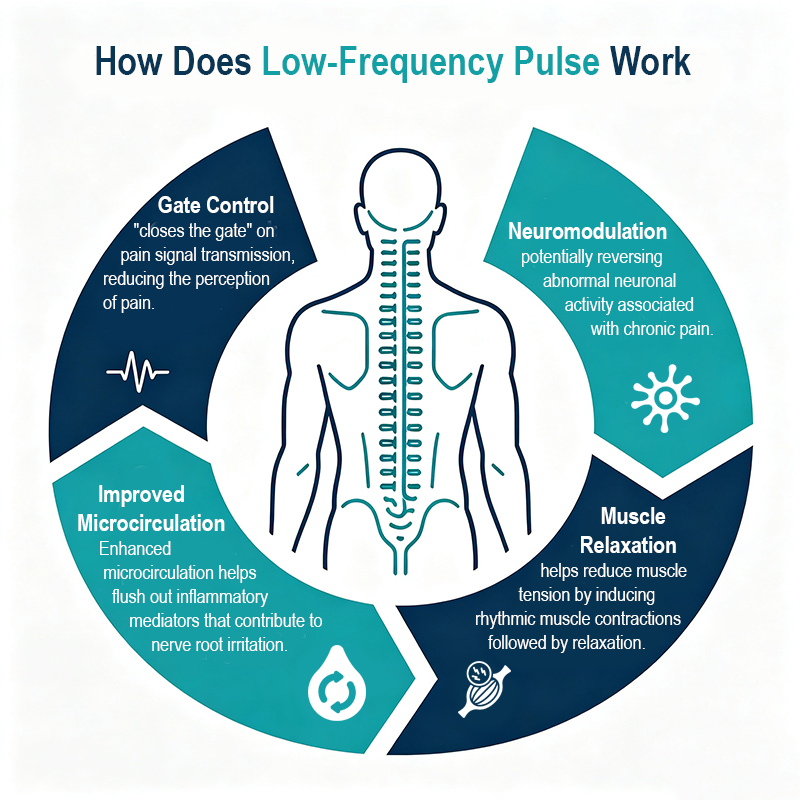
Pain Signal Modulation (Gate Control Theory)
One of the primary mechanisms is based on the gate control theory of pain. Low-frequency electrical stimulation activates large-diameter sensory nerve fibers (A-beta fibers), which transmit signals to the spinal cord faster than pain signals carried by smaller C-fibers and A-delta fibers. This "closes the gate" on pain signal transmission, reducing the perception of pain. Additionally, the stimulation triggers the release of endogenous opioids—the body's natural painkillers—which further contributes to analgesia.
Improved Microcirculation
The electrical currents promote vasodilation (widening of blood vessels) in the treated area. Enhanced microcirculation helps flush out inflammatory mediators that contribute to nerve root irritation—a key driver of pain in lumbar disc herniation. Better circulation also supports tissue healing by improving nutrient and oxygen delivery.
Muscle Relaxation
Muscle spasms often accompany disc herniation as the body attempts to splint the injured area. Low-frequency stimulation helps break this spasm-pain cycle by inducing rhythmic muscle contractions followed by relaxation, reducing overall muscle tension.
Neuromodulation
Some research suggests that low-frequency electrical stimulation can influence the excitability of sensory neurons in the spinal cord dorsal horn, potentially reversing abnormal neuronal activity associated with chronic pain. This neuromodulatory effect may explain why some patients experience benefits that extend beyond the immediate treatment session.
The Limitations: What These Devices Cannot Do
No Structural Repair
The most significant limitation is that these devices cannot repair or regenerate damaged disc tissue. The nucleus pulposus that has herniated through the annulus fibrosus will not be "pulled back" by electrical stimulation. For patients with significant disc protrusion or sequestration, the underlying mechanical problem remains unchanged.
Limited Benefit for Severe Cases
For patients with severe nerve compression, significant neurological deficits, or cauda equina syndrome, low-frequency therapy offers little to no benefit. In these situations, the nerve root is physically compressed by disc material, and no amount of electrical stimulation can relieve that mechanical pressure. Surgical intervention may be the only effective option.
Not a Replacement for Comprehensive Care
Low-frequency pulse therapy works best as part of a broader treatment plan. Relying solely on a device while neglecting other critical components—such as core strengthening, activity modification, and proper ergonomics—is unlikely to yield satisfactory long-term results.
Variable Individual Response
Not everyone responds to electrical stimulation in the same way. Factors such as pain chronicity, individual nerve sensitivity, and the specific characteristics of the disc herniation all influence outcomes. Some patients experience significant relief; others notice little change.
Practical Recommendations for Use
If you are considering low-frequency pulse therapy for lumbar disc herniation, here are some practical guidelines:
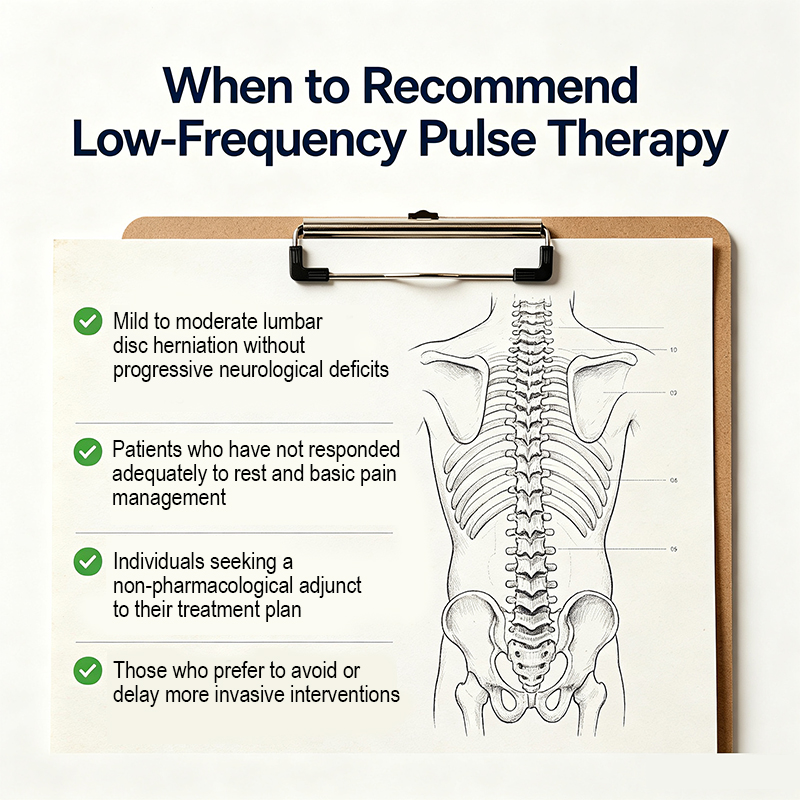
When to Consider It
·Mild to moderate lumbar disc herniation without progressive neurological deficits
·Patients who have not responded adequately to rest and basic pain management
·Individuals seeking a non-pharmacological adjunct to their treatment plan
·Those who prefer to avoid or delay more invasive interventions
When to Avoid It
·Implanted cardiac devices – Patients with pacemakers or other electronic implants should never use these devices, as the electrical current can interfere with device function.
·Pregnancy – Use over the abdomen is contraindicated.
·Skin conditions – Electrodes should not be placed over broken skin, infected areas, or wounds.
·Active bleeding or clotting disorders – The increased circulation may be problematic.
·Malignancy – Treatment over tumor sites is not recommended.
·Acute inflammation or fever – These conditions should be resolved before treatment.
How to Use It Effectively
·Start low and go slow – Begin with the lowest intensity setting and gradually increase to a comfortable level. The goal is a strong but not painful sensation.
·Follow recommended duration – Typical sessions last 15 to 30 minutes. Overuse does not increase benefit and may cause skin irritation.
·Be consistent – Like most physical therapies, benefits accumulate with regular use over several weeks rather than from a single session.
·Position electrodes correctly – Placement should target the painful area and follow the manufacturer's guidelines. Poor placement reduces effectiveness.
·Combine with active measures – Use the device alongside core strengthening exercises, posture correction, and activity modification. Passive therapy alone is rarely sufficient.
As with any medical decision, consultation with a qualified healthcare provider is essential before starting low-frequency pulse therapy. A professional can help determine whether the therapy is appropriate for your specific situation, guide you on proper use, and ensure that more serious conditions are not being overlooked.
Subscribe means that you have read and agree to the Privacy Policy.

Subscribe means that you have read and agree to the Privacy Policy.
Copyright © Shenzhen Pango Medical Electronics Co.,Ltd, Ltd. All Rights Reserved.
 FOCUS ON YOUR FAMILY HEALTH
Tel: +86-0755-33825988
Fax: +86-0755-33825989
Email: sales2@pan-go.com