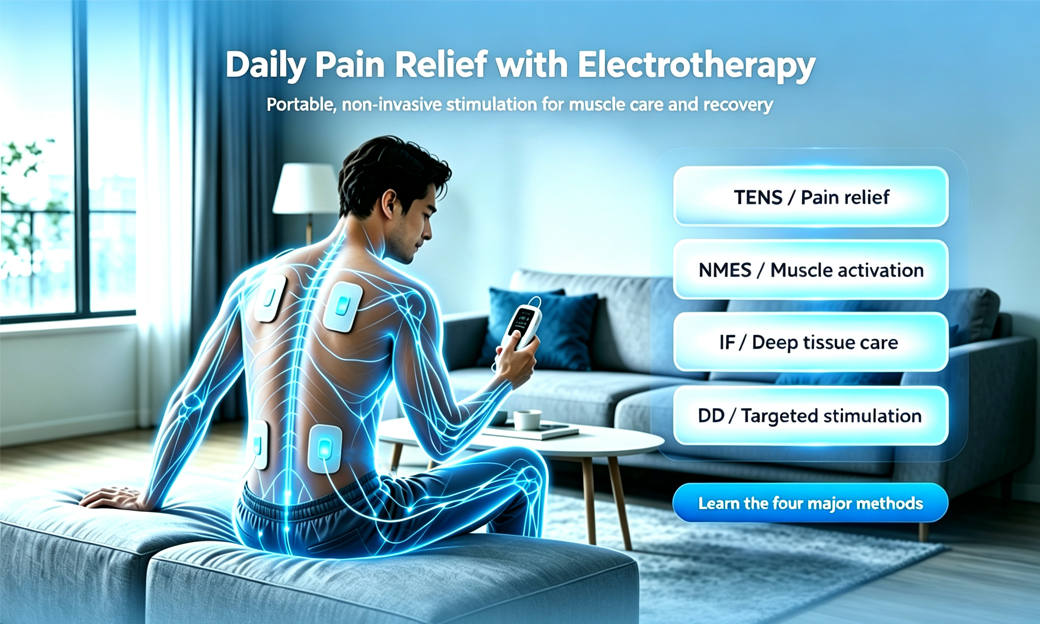
Low-frequency electrotherapy has become an essential part of modern rehabilitation and pain management. From physical therapy clinics to home wellness devices, electrical stimulation is widely used to relieve pain, activate muscles, improve circulation, and support functional recovery.
With advances in technology, professional electrotherapy is no longer limited to hospitals. Portable home-use devices now make it possible to enjoy convenient, non-invasive therapy for daily pain relief and muscle care.
Among the many electrotherapy techniques available today, four are considered the most widely used:
· Transcutaneous Electrical Nerve Stimulation (TENS)
· Neuromuscular Electrical Stimulation (NMES)
· Interferential Therapy (IF)
· Diadynamic Therapy (DD)
Although all four use low-frequency electrical stimulation, each works differently and serves unique therapeutic purposes. Understanding these differences can help you choose the right solution for pain relief, rehabilitation, or everyday wellness.
What Is Low-Frequency Electrotherapy?
Low-frequency electrotherapy refers to therapeutic techniques that use electrical currents—typically below 1,000 Hz—to stimulate nerves, muscles, or soft tissues. These electrical impulses trigger physiological responses that may help reduce pain, improve muscle performance, promote blood circulation, and support rehabilitation.
Unlike medications, electrotherapy is non-invasive and drug-free. It has become a popular option for people looking to manage chronic pain, recover from injuries, improve mobility, or maintain muscle function as they age.
Depending on the waveform and treatment goal, electrical stimulation may be used to:
Relieve acute and chronic pain
Stimulate weakened muscles
Improve local blood circulation
Reduce muscle stiffness and spasms
Support rehabilitation after neurological or orthopedic conditions
Promote everyday recovery and wellness
How Does Electrical Stimulation Work?
Electrical stimulation delivers controlled pulses through electrodes placed on the skin. These impulses interact with the body's nervous system and muscles in different ways depending on the selected therapy.
Some waveforms mainly stimulate sensory nerves to reduce pain, while others activate motor nerves to produce muscle contractions. Certain therapies are designed to reach deeper tissues for chronic pain management or circulation support. This is why different electrotherapy technologies are used for different clinical and home-care purposes.
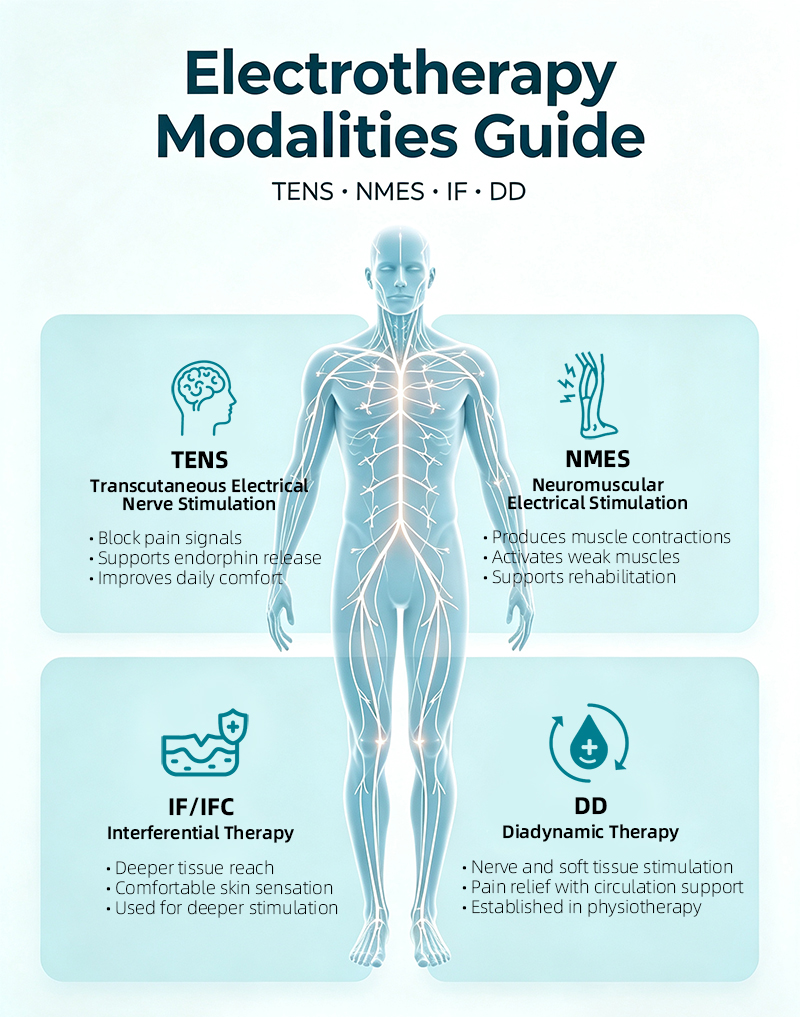
Transcutaneous Electrical Nerve Stimulation, commonly known as TENS, is one of the most widely used electrotherapy methods for pain relief.
TENS works by sending gentle electrical impulses through the skin to stimulate sensory nerves. These impulses may interfere with pain signals traveling to the brain while also encouraging the body to release endorphins—its natural pain-relieving chemicals.
Unlike muscle stimulation therapies, TENS does not aim to produce strong muscle contractions. Instead, its primary goal is to reduce discomfort and improve daily comfort.
· Drug-free pain relief
· Non-invasive treatment
· Easy to use at home
· Comfortable stimulation
· Suitable for regular use
TENS is frequently used for:
· Neck and shoulder pain
· Lower back pain
· Knee discomfort
· Arthritis-related pain
· Sports-related muscle soreness
· Chronic musculoskeletal pain
For many users, TENS serves as a convenient daily wellness solution for managing recurring aches and pains.
Neuromuscular Electrical Stimulation (NMES) targets motor nerves instead of sensory nerves. The electrical impulses generate visible muscle contractions, making NMES an important tool in rehabilitation and muscle conditioning.
Rather than focusing only on pain relief, NMES is designed to activate muscles that have become weak due to injury, aging, or reduced physical activity.
· Activates weakened muscles
· Helps maintain muscle mass
· Improves muscle strength
· Promotes local blood circulation
· Supports rehabilitation programs
· Encourages functional movement
NMES is commonly used for:
· Muscle strengthening
· Rehabilitation after injury
· Recovery after surgery
· Stroke rehabilitation programs
· Lower-limb muscle activation
· Age-related muscle weakness
Because healthy muscles contribute to joint stability and mobility, NMES is often recommended as part of comprehensive rehabilitation and wellness routines.
Interferential Therapy (IF), sometimes called IFC therapy, uses two medium-frequency electrical currents that intersect within the body's tissues. Their interaction creates a therapeutic low-frequency effect capable of reaching deeper structures while remaining comfortable on the skin.
Compared with conventional TENS, IF therapy is often selected when deeper stimulation is desired.
· Greater treatment comfort
· Deeper tissue penetration
· Larger treatment area
· Supports circulation
· Helps reduce muscle tension
· Suitable for chronic pain management
Interferential Therapy is widely used for:
· Chronic back pain
· Joint discomfort
· Knee pain
· Sports injuries
· Soft tissue recovery
· Muscle tightness
Its ability to stimulate deeper tissues makes IF a valuable option for both rehabilitation clinics and advanced home electrotherapy devices.
Diadynamic Therapy, also known as Bernard Currents, is a classic electrotherapy technique that uses rectified sinusoidal currents to stimulate nerves and soft tissues.
Although less common in consumer devices than TENS or NMES, Diadynamic Therapy remains an established modality in physiotherapy because of its ability to combine pain relief with circulation support.
· Helps relieve muscle stiffness
· Supports blood circulation
· Reduces muscle tension
· Promotes relaxation
· Complements rehabilitation programs
Diadynamic Therapy may be used for:
· Muscle strain
· Joint discomfort
· Tendon irritation
· Muscle spasms
· Chronic musculoskeletal pain
· Circulation support
Pulse | Primary Target | Main Purpose | Muscle Contraction | Best For |
TENS | Sensory nerves | Pain relief | Minimal | Everyday pain management |
NMES | Motor nerves | Muscle activation | Strong | Rehabilitation and strengthening |
IF | Deep tissues | Deep pain relief | Mild | Chronic pain and sports recovery |
DD | Nerves & soft tissues | Pain relief and circulation | Mild | Muscle stiffness and circulation support |
Although these therapies all use electrical stimulation, they are designed for different wellness and rehabilitation goals. Choosing the right modality depends on whether your primary objective is pain relief, muscle strengthening, or functional recovery.
The best electrotherapy option depends on your individual needs.
Choose TENS if your goal is temporary pain relief from common musculoskeletal discomfort.
Choose NMES if you want to stimulate muscles, improve muscle performance, or support rehabilitation after inactivity or injury.
Choose Interferential Therapy if you need deeper stimulation for chronic pain or larger treatment areas.
Choose Diadynamic Therapy if your priority is relieving muscle tension while promoting circulation.
Many modern electrotherapy devices combine multiple stimulation modes, allowing users to customize treatments according to different symptoms and recovery goals.
As home rehabilitation continues to grow in popularity, portable electrotherapy devices provide a convenient way to incorporate electrical stimulation into daily wellness routines.
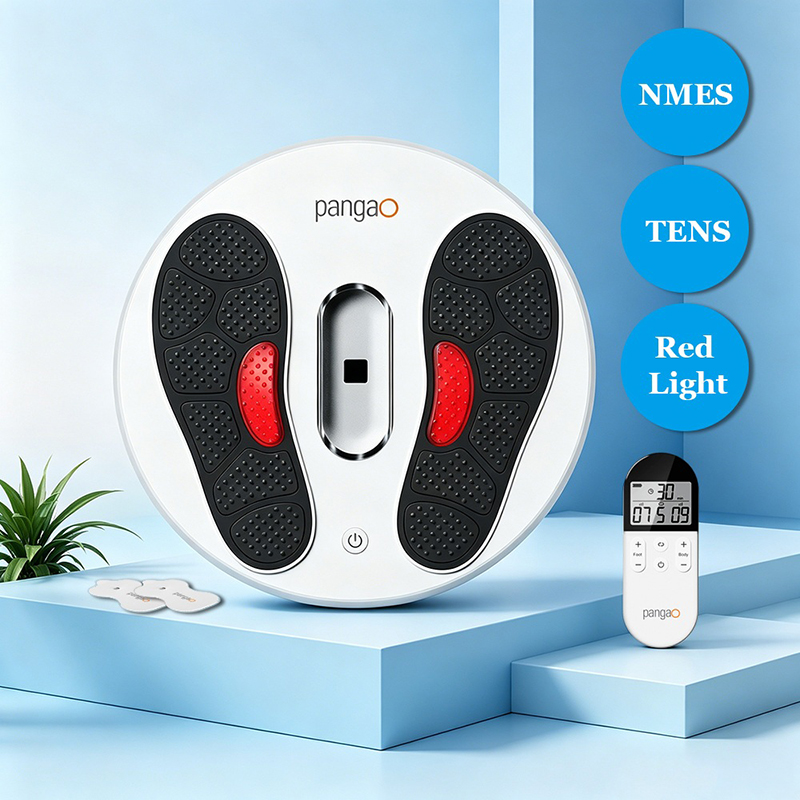
The Pangao KTR-4029 is designed specifically for daily foot care using Neuromuscular Electrical Stimulation (NMES).
Unlike traditional electrical stimulators that require adhesive electrode pads, the KTR-4029 applies NMES stimulation through the plantar surface of the feet, making treatment simple.
· NMES stimulation designed for the soles of the feet
· Supports daily foot wellness and muscle activation
· May help promote circulation in the lower limbs
· Suitable for older adults looking to maintain mobility
· Can be incorporated into daily foot-care routines for people concerned about diabetic foot health
· 9 pre-programmed therapy modes
· 20 adjustable intensity levels
· Built-in red light therapy for additional foot care support
· Comfortable and easy-to-use design for home use
By combining NMES technology with red light therapy, the KTR-4029 offers a practical solution for users seeking convenient foot care and lower-limb wellness at home.
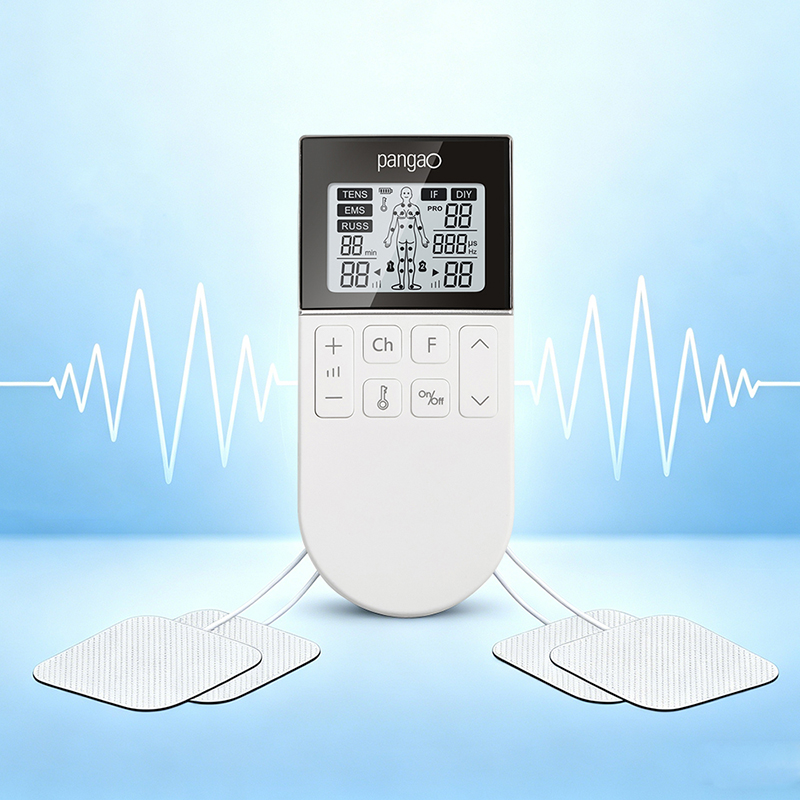
For users looking for versatile whole-body electrotherapy, the Pangao KTR-2610 integrates five professional stimulation modes into one compact device.
· TENS
· EMS
· RUSS (Russian Stimulation)
· IF (Interferential Therapy)
· DIY Custom Mode
· Portable handheld design
· Dual-channel output for treating two body areas simultaneously
· Adjustable stimulation intensity
· Suitable for the neck, shoulders, back, waist, arms, knees, and legs
· Designed to support pain relief, muscle stimulation, and daily recovery
· Convenient for home, office, and travel use
With multiple therapy modes available in one device, the KTR-2610 gives users greater flexibility to address different wellness and rehabilitation needs without requiring multiple devices.
Home electrotherapy devices are generally easy to use, but following proper safety guidelines is important.
· Read the user manual carefully before use.
· Start with the lowest comfortable intensity and increase gradually.
· Do not place electrodes over the heart, throat, or broken skin.
· Individuals with pacemakers or other implanted electronic devices should consult a healthcare professional before using electrical stimulation.
· If you are pregnant or have a medical condition, seek professional advice before beginning electrotherapy.
Subscribe means that you have read and agree to the Privacy Policy.

Subscribe means that you have read and agree to the Privacy Policy.
Copyright © Shenzhen Pango Medical Electronics Co.,Ltd, Ltd. All Rights Reserved.
 FOCUS ON YOUR FAMILY HEALTH
Tel: +86-0755-33825988
Fax: +86-0755-33825989
Email: sales2@pan-go.com