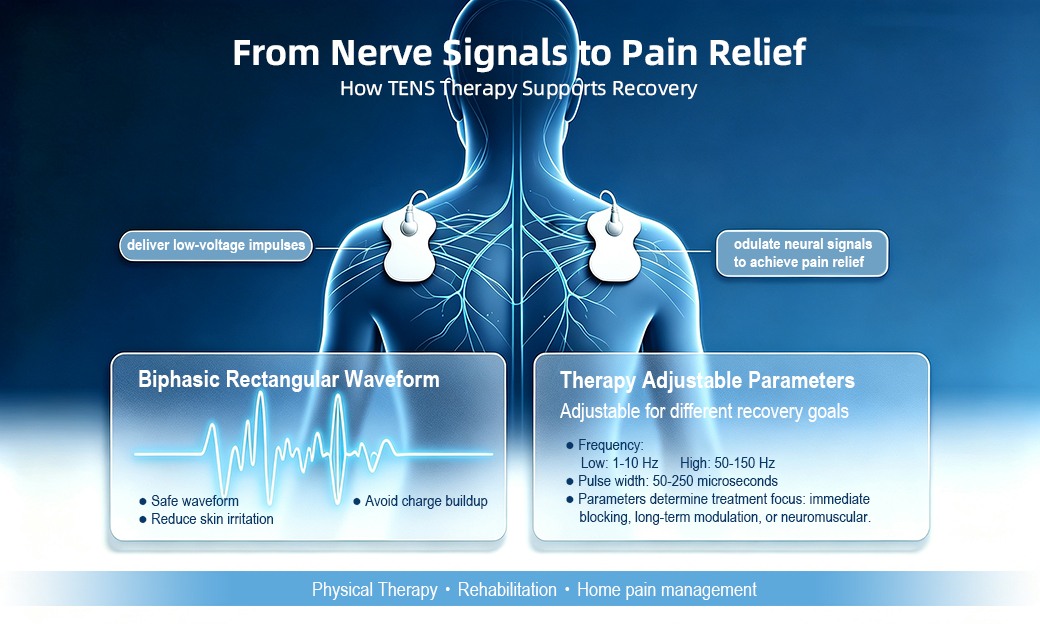
Transcutaneous Electrical Nerve Stimulation (TENS) is a widely used non-invasive electrotherapy technique designed to relieve pain by delivering low-voltage electrical impulses through electrodes placed on the skin. It is commonly used in physical therapy, rehabilitation medicine, and home-based pain management.
The electrical stimulation used in TENS typically follows a biphasic rectangular waveform, which is considered safe and comfortable because it reduces the risk of skin irritation and charge buildup under the electrodes. The therapy parameters can be adjusted depending on treatment goals. In general, the frequency ranges from low (1–10 Hz) to high (50–150 Hz), while the pulse width usually falls between 50–250 microseconds. These parameters play a key role in determining whether the treatment focuses on immediate pain blocking, longer-term pain modulation, or neuromuscular response.
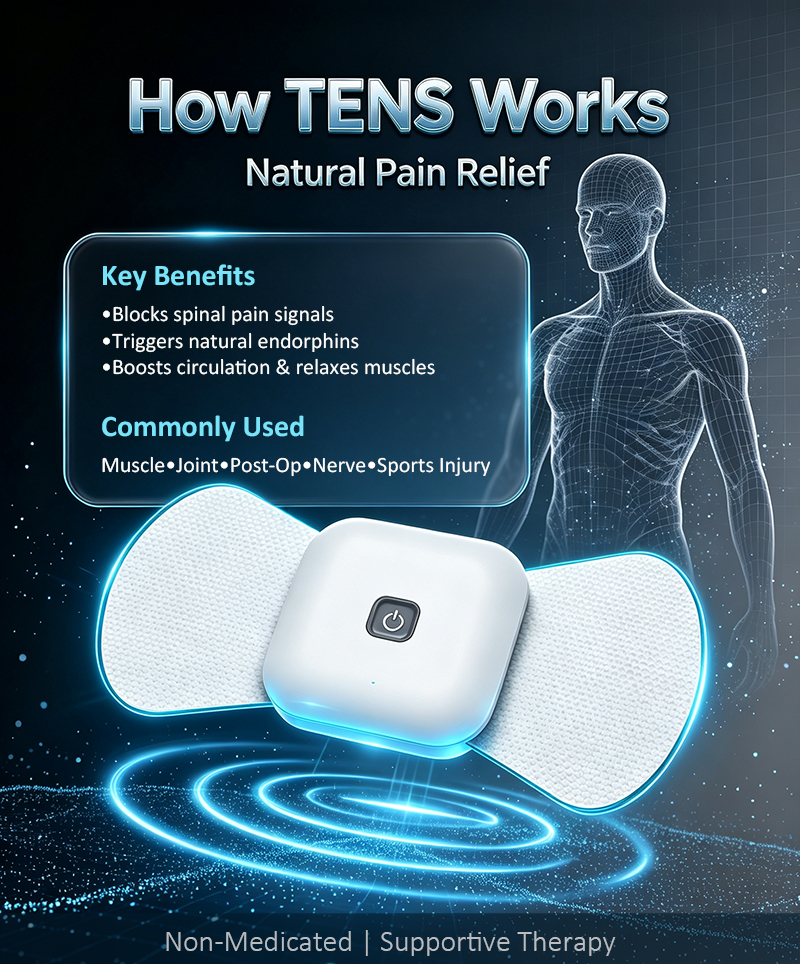
The pain-relieving effect of TENS is primarily explained by the “gate control theory of pain.” According to this theory, electrical stimulation activates large-diameter sensory nerve fibers (A-beta fibers), which interfere with or “close the gate” on pain signals transmitted by smaller nociceptive fibers (A-delta and C fibers) at the spinal cord level. As a result, pain perception is reduced before it reaches the brain.
Beyond this spinal mechanism, TENS also influences the body’s endogenous pain control systems. Low-frequency stimulation may trigger the release of endorphins and enkephalins, which are natural opioid-like substances that help reduce pain and promote a sense of well-being. In addition, TENS may improve local blood circulation, reduce muscle tightness, and help modulate abnormal nerve excitability in chronic pain conditions.
Clinically, TENS is commonly used for musculoskeletal pain, osteoarthritis, post-operative discomfort, neuropathic pain, and sports-related injuries. While it is not a cure for underlying conditions, it is often valued as a supportive therapy that reduces reliance on medication and improves daily function.
A typical TENS session begins with electrode placement, which is usually done around the painful area or along the relevant nerve pathway. Proper placement is essential, as it determines how effectively the electrical current stimulates sensory nerves. Once the electrodes are positioned, the device settings are adjusted according to the patient’s condition and treatment goal.
During treatment, the intensity is gradually increased until the patient feels a strong but comfortable tingling sensation. In conventional TENS therapy, this sensation should not be painful and usually does not cause visible muscle contraction. Depending on the protocol, sessions typically last between 15 and 45 minutes and can be repeated once or multiple times per day.
Different stimulation modes may also be used in practice. High-frequency TENS is often chosen for rapid pain relief, while low-frequency TENS is more commonly associated with longer-lasting analgesic effects through endorphin release. Some devices also offer burst or modulated modes to prevent nerve adaptation and maintain treatment effectiveness over time.
The effectiveness of TENS therapy depends on several interrelated factors. Accurate electrode placement is one of the most important, as incorrect positioning can significantly reduce nerve stimulation efficiency. In addition, the choice of frequency, pulse width, and intensity must match the patient’s pain type and sensitivity level. Acute pain conditions often respond more quickly to TENS, while chronic pain may require longer and more consistent use.
Individual differences also play a role. Skin impedance, nerve sensitivity, and the underlying cause of pain can all influence treatment outcomes. High-quality electrodes and good skin contact are essential for stable and effective stimulation.
Although TENS is generally considered safe, some mild side effects may occur, including skin redness, slight irritation, or discomfort if the intensity is too high. These effects are usually temporary and resolve quickly after stopping treatment. However, TENS should be used cautiously in individuals with implanted electronic devices such as pacemakers, and it should avoid sensitive areas unless supervised by a healthcare professional.
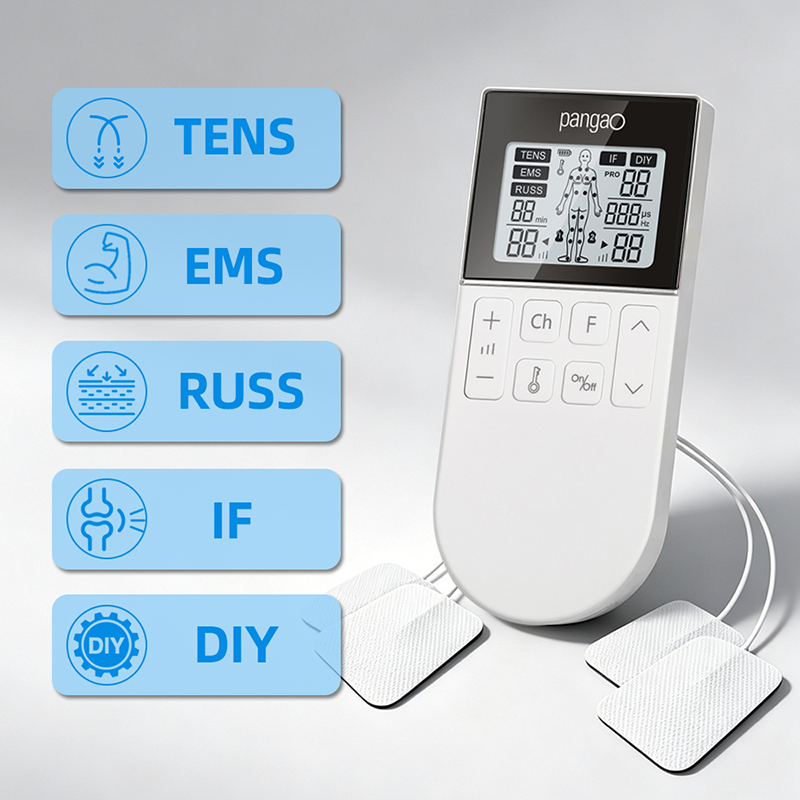
With advances in portable medical technology, TENS therapy is now widely available for home use. One example is the Pangao KTR-2610 TENS Unit, which integrates multiple electrotherapy functions into a single compact system.
In addition to TENS, this device also includes EMS (Electrical Muscle Stimulation) for muscle activation and strengthening, Russian stimulation (RUSS) for deeper muscle contraction training, interferential current therapy (IF) for deeper tissue pain modulation, and a DIY mode that allows users to customize stimulation parameters according to personal needs. With dual-channel output, users can treat multiple body areas simultaneously, which increases convenience in daily rehabilitation.
The device also offers 80 preset therapy modes and 16 adjustable intensity levels, making it adaptable for different pain conditions and recovery stages. Its handheld and portable design makes it suitable for home therapy scenarios such as chronic neck and back pain, muscle fatigue, post-exercise recovery, and general physical rehabilitation support.
TENS is a well-established and versatile electrotherapy method that provides effective, non-drug pain relief through both spinal and neurochemical mechanisms. When properly applied with appropriate settings and electrode placement, it can significantly improve pain control and functional comfort in a wide range of conditions. Combined with modern portable devices such as the Pangao KTR-2610, TENS therapy has become more accessible and practical for everyday home rehabilitation, offering users a convenient way to manage pain and support recovery.
Subscribe means that you have read and agree to the Privacy Policy.

Subscribe means that you have read and agree to the Privacy Policy.
Copyright © Shenzhen Pango Medical Electronics Co.,Ltd, Ltd. All Rights Reserved.
 FOCUS ON YOUR FAMILY HEALTH
Tel: +86-0755-33825988
Fax: +86-0755-33825989
Email: sales2@pan-go.com